
Gold vs Green vs Diamond vs Bronze Open Access Explained
In brief
Compare Gold, Diamond, Hybrid, Green, and Bronze Open Access. Learn who pays APCs, how Version of Record differs from AAM, and what reuse rights apply.
Keywords: gold vs green vs bronze vs diamond open access; gold vs green open access; what is diamond open access; bronze open access meaning; hybrid open access vs gold
Why "Free to Download" Does Not Mean the Same Version—or the Same Legal Rights
When you click a free PDF link in Google Scholar, OpenAlex, or a browser extension like Unpaywall, you might land on a polished publisher PDF, a Word-style manuscript hosted on a university server, or a promotional article that suddenly goes back behind a paywall a month later.
Bibliometric databases and libraries group these free scholarly articles into five color-coded categories: Gold, Diamond, Hybrid, Green, and Bronze Open Access (OA). While all five let you read the research without paying a subscription fee, they differ in three practical ways that directly affect your daily work:
- Which version of the paper you are reading: Are you looking at the publisher's final formatted Version of Record (VoR), a peer-reviewed Author Accepted Manuscript (AAM) without journal typesetting, or an unrefereed Preprint?
- Who paid for publication: Did the author or funder pay an Article Processing Charge (APC), did a scholarly consortium subsidize the journal, or did the author self-archive for free?
- What you are legally allowed to do with the PDF: Can you redistribute the file, extract figures for a presentation, or publish a full translation, or are you strictly limited to personal reading?
Here is how to tell the five Open Access models apart at a glance and verify what you can do with any paper you download.
Gold, Diamond, Hybrid, Green, and Bronze Open Access Compared
The fastest way to separate the five models is to check where the file is hosted, who funds the journal, and whether an explicit Creative Commons license is attached.
The Publisher-Hosted Models: Gold, Diamond, and Hybrid OA
When people think of Open Access in the traditional sense, they are usually looking at Gold, Diamond, or Hybrid articles. In all three models, the article is unlocked immediately upon publication on the publisher's website as the final Version of Record (VoR)—complete with final page numbers, official formatting, copyediting, and permanent Crossref metadata.
1. Gold Open Access: Immediate VoR Funded by APCs
In a pure Gold OA journal, every single article published in that journal is immediately free to read online. There are no subscription paywalls for any issue. To cover peer-review management, hosting, and production costs, Gold OA journals typically charge an Article Processing Charge (APC) once a paper is accepted. This fee is usually paid by the author's research grant, employer, or university library rather than out of the author's personal pocket.
Most major funders (such as cOAlition S, the NIH, and UKRI) require Gold OA papers to carry a permissive license—most commonly CC BY 4.0—meaning anyone can share, text-mine, or translate the paper as long as they credit the original authors.
2. Diamond (Platinum) Open Access: Zero Fees for Readers and Authors
A common misconception among early-career researchers is that "Open Access always costs the author money." Diamond OA (sometimes called Platinum OA) disproves that.
Diamond OA journals deliver the exact same reader benefits as Gold OA—immediate access to the final Version of Record under an explicit open license—while charging zero fees to both readers and authors. Instead of relying on subscriptions or APCs, Diamond journals are subsidized by academic societies, university presses, national science agencies, or library coalitions. In computer science and computational linguistics, flagship venues like the Journal of Machine Learning Research (JMLR) and the ACL Anthology have operated on the Diamond OA model for decades.
3. Hybrid Open Access: Open Articles Inside Subscription Journals
A Hybrid OA journal is a traditional subscription journal where most articles remain locked behind a paywall, except for specific papers whose authors paid an APC (or used a university "transformative agreement") to make their individual work open.
For a reader, a Hybrid OA article behaves just like a Gold OA article: you get the final Version of Record on the publisher's site with a Creative Commons license. However, watch the license line closely—many commercial publishers default Hybrid OA authors into more restrictive licenses like CC BY-NC-ND unless the author's funding agency mandates CC BY.
Green Open Access: Repositories, Preprints, and Author Accepted Manuscripts (AAM)
What if an author cannot afford a Gold or Hybrid APC, and their target journal is a closed subscription title? That is where Green Open Access (also known as self-archiving) comes in.
Under most journal copyright agreements, authors retain the right to deposit a copy of their paper in a public repository—such as their university's institutional repository, a disciplinary archive like arXiv or bioRxiv, or a funder repository like PubMed Central (PMC).
When you read a Green OA paper, you need to check which stage of the manuscript you have opened:
- Preprint (Submitted Manuscript): The version uploaded before formal peer review. It is invaluable for fast scientific communication, but experimental claims or conclusions may change before final journal publication.
- Author Accepted Manuscript (AAM / Postprint): The version after peer review has finished and the editor has officially accepted the paper, but before the publisher applies its proprietary layout, logos, and final pagination.
Practical tip for citing Green OA: An AAM contains the exact same scientific text, data, and peer-reviewed conclusions as the publisher's paywalled PDF. However, because it uses the author's manuscript pagination (often numbered Page 1 to 25 in a standard template), avoid citing specific page numbers for direct quotes unless you match them against the published metadata, and always include the journal's official DOI in your reference list.
Also note that many subscription publishers impose a 6- to 24-month embargo before an AAM can be unlocked in a repository, and unless a funder policy applies, Green OA manuscripts often carry standard publisher copyright rather than an open Creative Commons license.
Bronze Open Access: The "Free to Read, Illegal to Reuse" Trap
Coined by the researchers behind Unpaywall in their landmark 2018 study of scholarly publishing, Bronze Open Access describes one of the largest—and most misunderstood—categories of free academic literature.
A Bronze OA paper is free to read directly on the publisher's official website, right alongside Gold and Hybrid articles. You can click "Download PDF" without logging in through a university library. However, Bronze OA articles carry no open license whatsoever.
Why do publishers release Bronze OA articles?
- Delayed Open Access ("Moving Walls"): A journal keeps articles behind a paywall for the first 12 or 24 months after publication, then makes older archives free to read on its site while retaining full copyright.
- Promotional or Editorial Access: Editors temporarily unlock a "featured article of the month," a special review issue, or a public-health collection.
Because there is no Creative Commons license attached, Bronze OA carries two major risks for researchers and educators:
- Access can vanish overnight: Because the publisher made the paper free at its own discretion rather than under an irrevocable license, a promotional Bronze OA article can return behind a paywall at any time.
- No redistribution or adaptation rights: You can download a Bronze OA PDF for your own personal reading and research, but you cannot legally upload that PDF to a public course website, republish its figures in a book, or distribute a translated edition to the public.
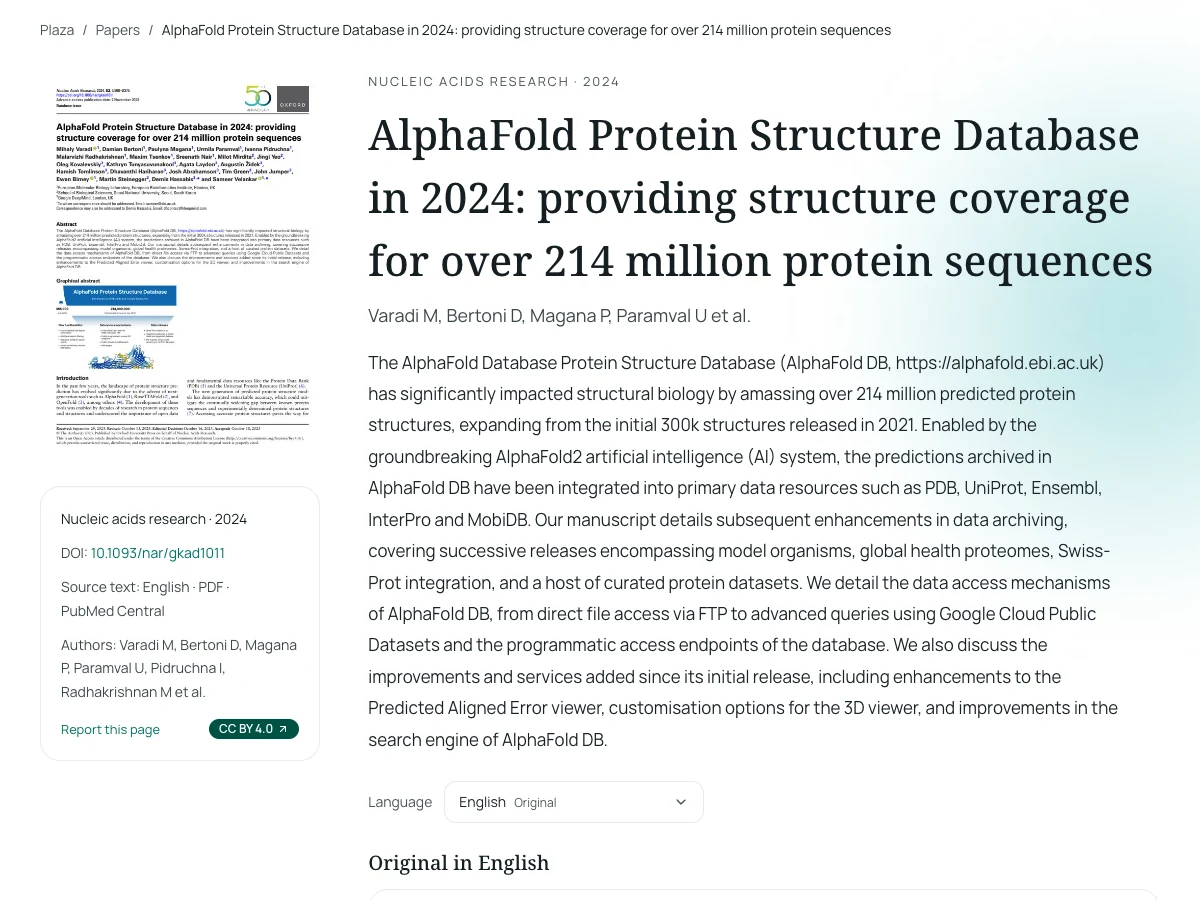
This licensing boundary explains why discovery tools like Unpaywall surface Green and Bronze PDFs for personal reading, whereas shared translation catalogs like Equalang Plaza filter specifically for works carrying explicit CC BY, CC BY-SA, or CC0 licenses. Once signed in on Equalang Plaza, readers can read and download those permissively licensed originals for free (0 credits), preview the first 20% of any translation side by side, or download full layout-preserved and alternating bilingual PDFs for 1/10 of standard translation credits—and contribute new CC BY, CC BY-SA, or CC0 paper translations back to the catalog because the underlying Gold, Diamond, or licensed repository terms explicitly authorize derivative works.
3-Step Checklist: How to Verify Any Open Access Paper in 30 Seconds
Before you cite a free PDF, upload it to a shared reading group, or translate it for publication, run through these three checks:
- Check the version watermark and header: Look at the top and side margins of page 1. If it shows the journal's official masthead, volume, issue, and final page range, you have the Version of Record (VoR). If it says "Author Manuscript," "Accepted for publication in..." or displays standard double-spaced manuscript formatting, you have a Green OA Author Accepted Manuscript (AAM)—the science is peer-reviewed, so cite the official journal DOI. If it says "Preprint — not peer-reviewed," check Crossref or Google Scholar to see if a peer-reviewed journal version has since appeared.
- Locate the license line (usually at the bottom of Page 1 or above the References): Look for an explicit statement such as
© The Author(s). Published under a Creative Commons Attribution 4.0 International License (CC BY 4.0). If you instead see© 2026 Publisher Inc. All rights reservedon a free publisher PDF, you are looking at Bronze OA. - Match your planned use to the license:
- Personal reading and citation: All five OA types (Gold, Diamond, Hybrid, Green, Bronze) are completely fine.
- Sharing a translated edition or adapting figures: Verify that the paper carries
CC BY,CC BY-SA, orCC0(orCC BY-NCif your use is strictly non-commercial), and avoidND(NoDerivatives) or unlicensed Bronze OA papers.
Frequently Asked Questions
Is a Green Open Access manuscript reliable to cite in my paper or thesis?
Yes—provided it is the Author Accepted Manuscript (AAM) and not an unrefereed preprint. An AAM has passed the journal's full peer-review process and contains the final approved text, tables, and conclusions; it simply lacks the publisher's final typesetting and copyediting layout. When citing an AAM, cite the final published journal details and official DOI rather than the university repository URL, unless no final Version of Record exists yet.
Why do some funders refuse to pay APCs for Hybrid Open Access journals?
Coalitions of major research funders (such as Plan S / cOAlition S) restrict grant funds from paying APCs in traditional Hybrid journals to prevent "double dipping"—where a publisher charges university libraries high subscription fees for the journal while also collecting individual APCs from authors for specific open articles. Many funders only cover Hybrid OA if the publisher has signed a formal "Transformative Agreement" (Read-and-Publish deal) committing to transition the journal toward full Open Access.
How can I tell if an open-access journal is a legitimate Diamond OA journal or a predatory journal?
A legitimate Diamond OA journal charges zero APCs to authors and is indexed in vetted registries like the Directory of Open Access Journals (DOAJ) with the "Without fees" filter enabled. Predatory journals, by contrast, operate on an aggressive APC-harvesting model: they send spam invitations promising rapid publication within days in exchange for an author fee, while skipping rigorous peer review. Always verify a journal's status on DOAJ (doaj.org) before submitting.
Sources
- Piwowar, H., Priem, J., Larivière, V., Alperin, J. P., Matthias, L., Norlander, B., Farley, A., West, J., & Haustein, S. (2018). The state of OA: a large-scale analysis of the prevalence and impact of Open Access articles. PeerJ, 6, e4375: https://doi.org/10.7717/peerj.4375
- Directory of Open Access Journals (DOAJ) — Guide to Open Access & No-Fee (Diamond) Journals: https://doaj.org/
- cOAlition S — Plan S Principles and Implementation Guidance on Open Access Models: https://www.coalitions.org/addendum-to-the-coalition-s-guidance-on-the-implementation-of-plan-s/principles-and-implementation/
- Suber, P. (2012). Open Access. MIT Press Essential Knowledge Series: https://mitpress.mit.edu/9780262517638/open-access/
- OpenAlex Technical Documentation — Open Access (
oa_status: gold, diamond, green, hybrid, bronze, closed): https://docs.openalex.org/api-entities/works/work-object#the-openaccess-object