Do You Need Translation Earbuds for Travel, or Is a Phone Enough?
 Equalang
In brief
Weighing translation earbuds against your phone? Compare counter chats, long talks, and tours to choose the right setup for your trip.
Keywords: translation earbuds; travel translation; translation devices; face-to-face translation; live listening
Before heading overseas, it is tempting to look at translation earbuds or dedicated pocket translators. The promise of fluid conversation across languages sounds appealing. Yet, carrying a single-purpose device brings practical trade-offs: keeping another battery charged, managing Bluetooth pairing, and the social awkwardness of handing an earbud to someone you have just met. For most travelers, deciding between specialized hardware and the smartphone already in your pocket comes down to where and how you actually need to communicate.
Short counter conversations: check-ins, transit, and ordering
Most travel communication consists of quick, 20-second exchanges: ordering food, asking for platform directions, buying museum tickets, or checking into a hotel. In these moments, pulling out dedicated earbuds, waiting for them to connect, and asking a busy hotel clerk or train attendant to wear one is impractical.
For brief encounters, a phone with a shared visual screen is significantly faster. Below is how this works in Equalang. In a standard mobile browser, you can open a face-to-face translation session without installing any app.
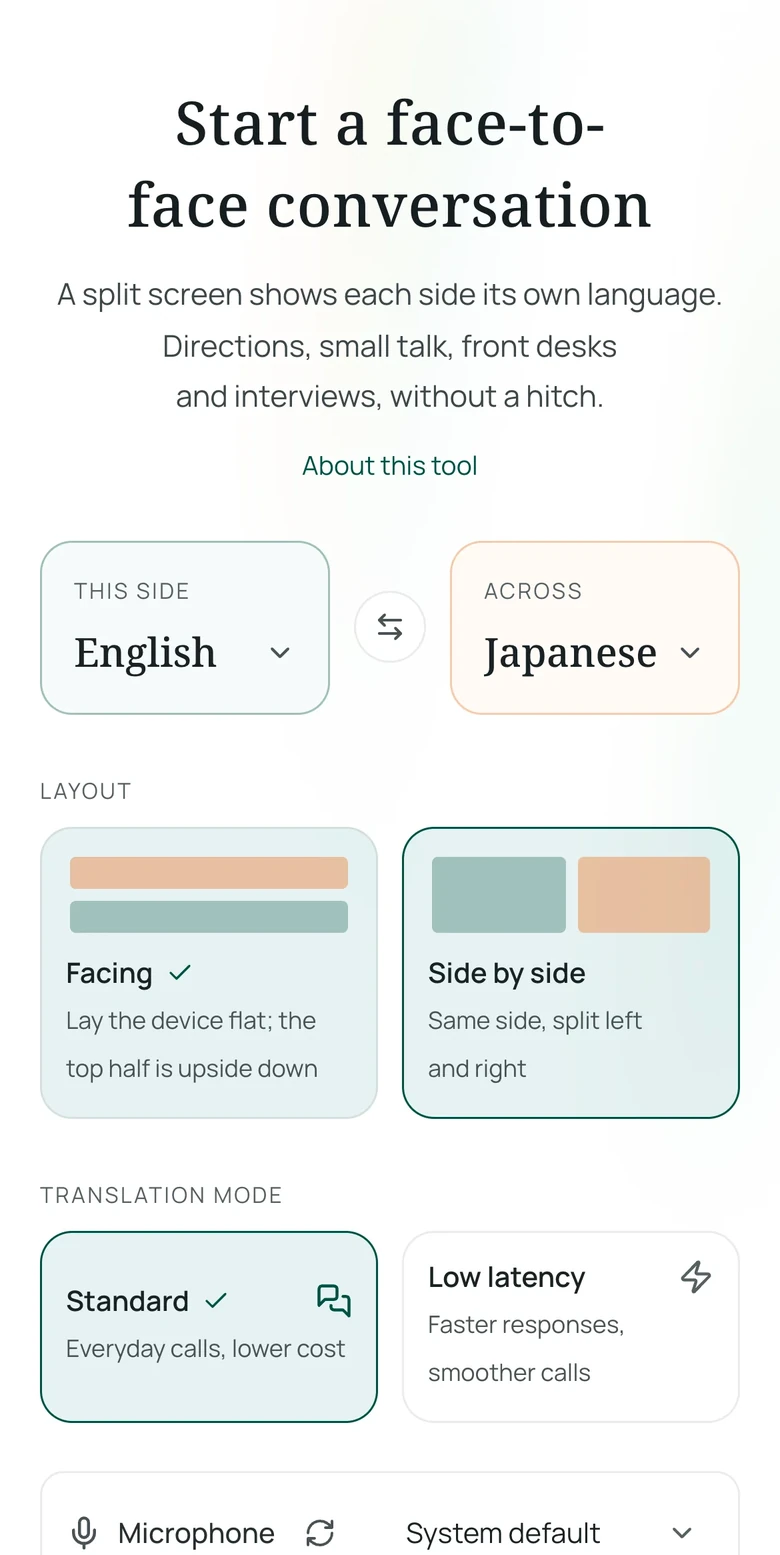
By placing the phone flat on the counter in "Facing" mode, the screen splits. Your half faces you right-side up, while the upper half is inverted toward the staff member. Each person speaks into the phone's microphone, and translations appear directly in front of the corresponding speaker.
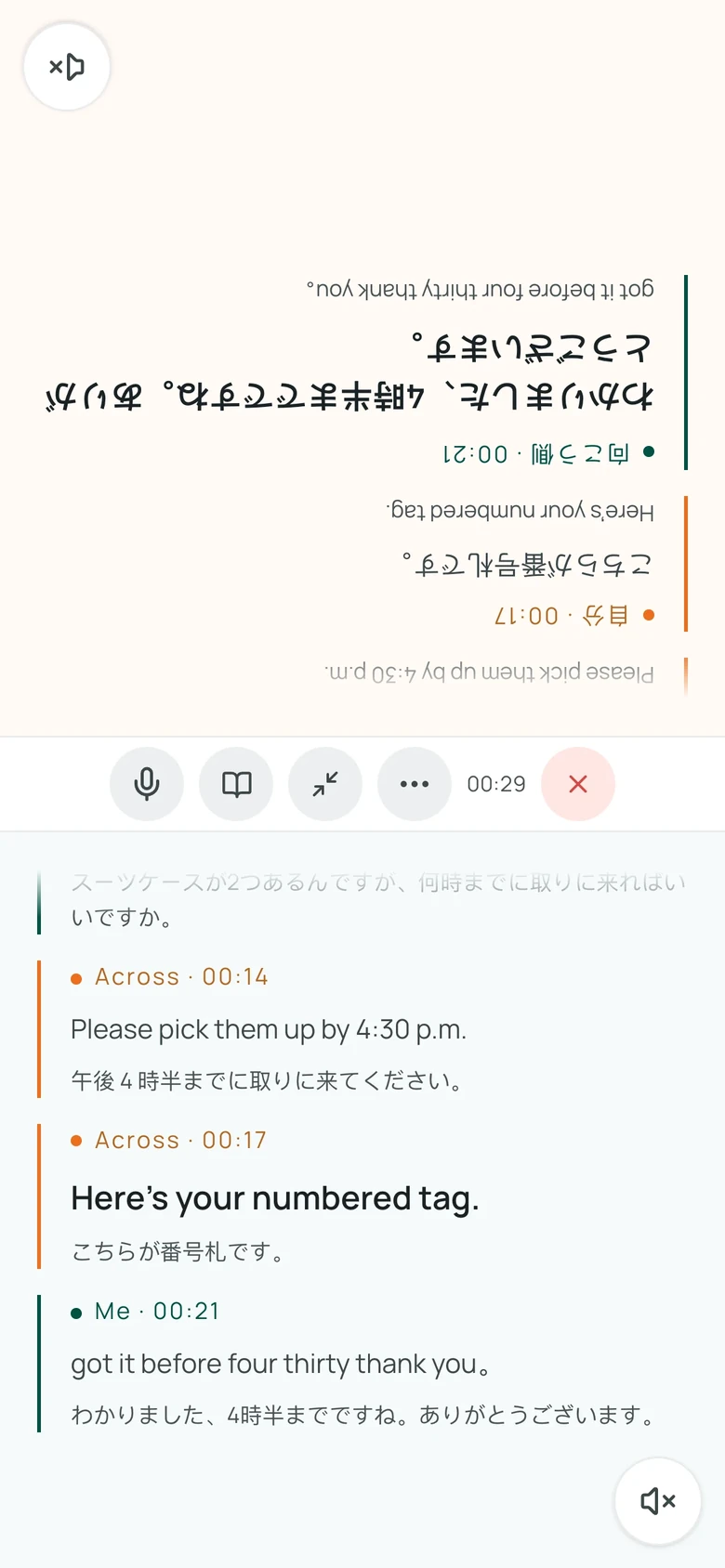
Having an on-screen transcript also prevents misunderstandings regarding numbers and times. If a luggage desk attendant specifies that bags must be retrieved by 4:30 p.m., both parties can immediately verify the details in writing.
Extended conversations and seated chats
When sitting down for a longer talk—such as chatting with an accommodation host, dining with local acquaintances, or asking a cafe owner for neighborhood tips—handing over personal earbuds remains a social hurdle. Sharing earbuds introduces hygiene concerns, and many people feel uncomfortable inserting a stranger's accessory into their ear.
A smartphone placed flat on the table between two people eliminates this friction. Both parties can maintain natural eye contact, speak at their own pace, and view the bilingual transcript as it updates. If you are traveling with parents or family members who find Bluetooth pairing and small earpieces frustrating, a clear shared screen is far easier to follow.
Listening to guided tours and announcements
A different situation arises when communication is strictly one-way: museum tours, guided historic walks, or transit announcements.
In these cases, two-way dialogue is unnecessary; you simply need to understand what the speaker is saying. A browser-based tool like Equalang Live Listening handles this directly on your phone or tablet.
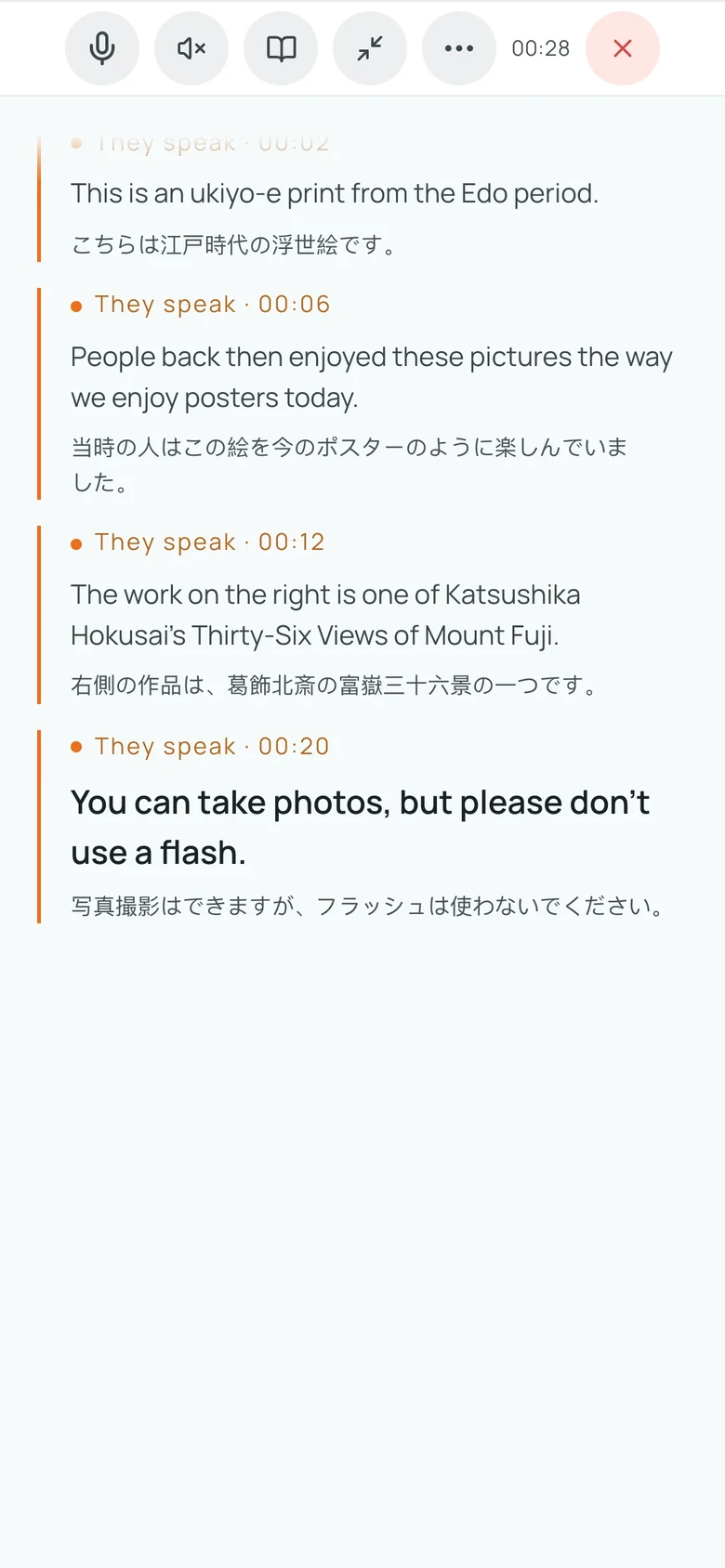
As the guide speaks, Live Listening displays English captions line by line with the original Japanese text underneath. You can read the scrolling bilingual text on screen or listen through your own regular headphones. For structured presentations or talks abroad, this setup keeps you informed without extra gear, as detailed in our guide on following foreign lectures.
When dedicated translation hardware still makes sense
While a phone handles common travel interactions well, dedicated translation earbuds or handheld devices offer genuine advantages in specific situations:
- Hands-free movement: If you are navigating on a bicycle, hiking outdoors, or managing heavy luggage through a crowded station, reaching for a phone can be clumsy or unsafe. Earbuds allow you to communicate while keeping your hands entirely free.
- Noisy acoustic environments: Many dedicated handheld units and specialized earbuds feature directional multi-microphone arrays designed to isolate vocal audio amidst heavy background ambient sound. While smartphones work reliably across quiet to moderate settings through a browser, browser-based voice processing has not been formally hardware-tested for severe background noise isolation. In bustling open-air markets or roaring transit halls, specialized acoustic hardware may isolate speech more effectively.
- Battery preservation: Continuous screen time and live web connections drain a phone's battery quickly. If you are out for full days without access to a portable power bank, using a standalone gadget preserves your phone's battery for navigation and emergency contact.
How to decide
Your choice depends primarily on your itinerary:
- For everyday travel logistics (ordering meals, taxis, hotel check-ins, asking directions): A phone browser with a split face-to-face screen is quick, avoids the awkwardness of sharing earbuds, and requires no extra hardware purchase.
- For museum tours and announcements: Running a live listening page in your smartphone browser alongside your everyday personal headphones provides a clean, bilingual readout.
- For hands-free activities or heavy noise: Dedicated earbuds or pocket translators remain a sensible choice if your trip involves active sports, constant walking with luggage, or loud environments where phone mics struggle.
For the vast majority of leisure trips, the phone you already carry is capable of bridging the language gap smoothly.