Live Translating Vidio Indonesian Streams & Football: A Bilingual Subtitle Guide
 Equalang
In brief
Wondering how to get real-time bilingual subtitles for Indonesian TV broadcasts and BRI Super League football commentary on Vidio? This guide covers live audio translation solutions for subtitle-free streams alongside technical constraints like DRM.
Keywords: Vidio; live audio translation; Indonesian bilingual subtitles; BRI Super League; live football streaming; Equalang
As Indonesia's leading domestic video and streaming platform, Vidio aggregates a wealth of exclusive local content—from the country's top-tier football competition (BRI Super League) to 24/7 livestreams of major television channels like SCTV, Indosiar, and Metro TV. However, international football fans, cross-border content creators, and language learners often face a natural barrier when watching these broadcasts: commentators and hosts speak Indonesian (Bahasa Indonesia), and streams rarely include official subtitle tracks. In addition, certain popular matches and channels require dedicated paid subscription plans and may be subject to regional access restrictions.
Live sports like football matches move at a rapid pace, with high-intensity moments packed with local slang and overlapping shouts, making it difficult to follow the action through listening alone. This article examines the current subtitle landscape on Vidio's web platform, compares common translation approaches, and demonstrates how to get bilingual Indonesian and Chinese subtitles using real-time audio translation.
Streaming Characteristics and Subtitle Limitations of Vidio Livestreams
Opening a Vidio livestream in a desktop browser reveals a video player built on Shaka Player. Unlike platforms that provide automatic speech captions out of the box, Vidio's TV channels and sports streams have the following characteristics:
- No native subtitle tracks: Livestreams generally do not include extractable text subtitle tracks (such as WebVTT containers or
<track>tags), meaning there is no ready-made text in the page's DOM tree. - Direct audio streaming: The player outputs audio directly to the browser's audio pipeline without providing any native speech-to-text display in the interface.
- Segmented dynamic delivery: Live broadcasts are delivered as dynamic, real-time stream segments, making it impossible to download a complete audio file for offline transcription as one would with on-demand video.
As a result, understanding commentary on Vidio livestreams cannot be accomplished through traditional methods that scrape and translate existing webpage text. Instead, it requires a live audio translation solution capable of processing the live stream in real time.
Comparing Common Translation Methods: Why Generic Tools Fall Short
When dealing with Vidio livestreams that lack subtitle tracks, conventional translation tools usually run into clear limitations:
1. Built-in Browser Live Captions (e.g., Chrome Live Caption)
- How it works: The browser processes tab audio locally and outputs captions.
- Key limitation: While it supports translation into multiple target languages, its main drawback is the lack of simultaneous bilingual display. Viewers cannot view the Chinese translation alongside the original Indonesian transcript to cross-check terms.
2. Standard Webpage Translation Extensions (DOM Text Replacement)
- How it works: These extensions monitor existing text elements on the page or hook into existing player subtitle containers to replace text.
- Key limitation: Since Vidio livestreams contain no subtitle text nodes in the DOM, these extensions find nothing to extract, rendering them completely ineffective.
3. Real-Time Audio Translation Extensions (e.g., Equalang)
- Best suited for: Livestreams without official subtitles, enabling simultaneous on-screen bilingual display of the original Indonesian audio transcript and Chinese translation.
Enabling Real-Time Indonesian Audio Translation on Vidio
Using the Equalang browser extension as an example, we tested its real-time audio translation performance on Vidio's Metro TV channel (Metro TV Live, during the program Metro Hari Ini).
After turning on live audio translation in the player, the extension automatically detected the source language as 'Indonesian'. We set the translation mode to 'Standard', the subtitle display type to 'Bilingual Subtitles', and the translation position to 'Below Original'.
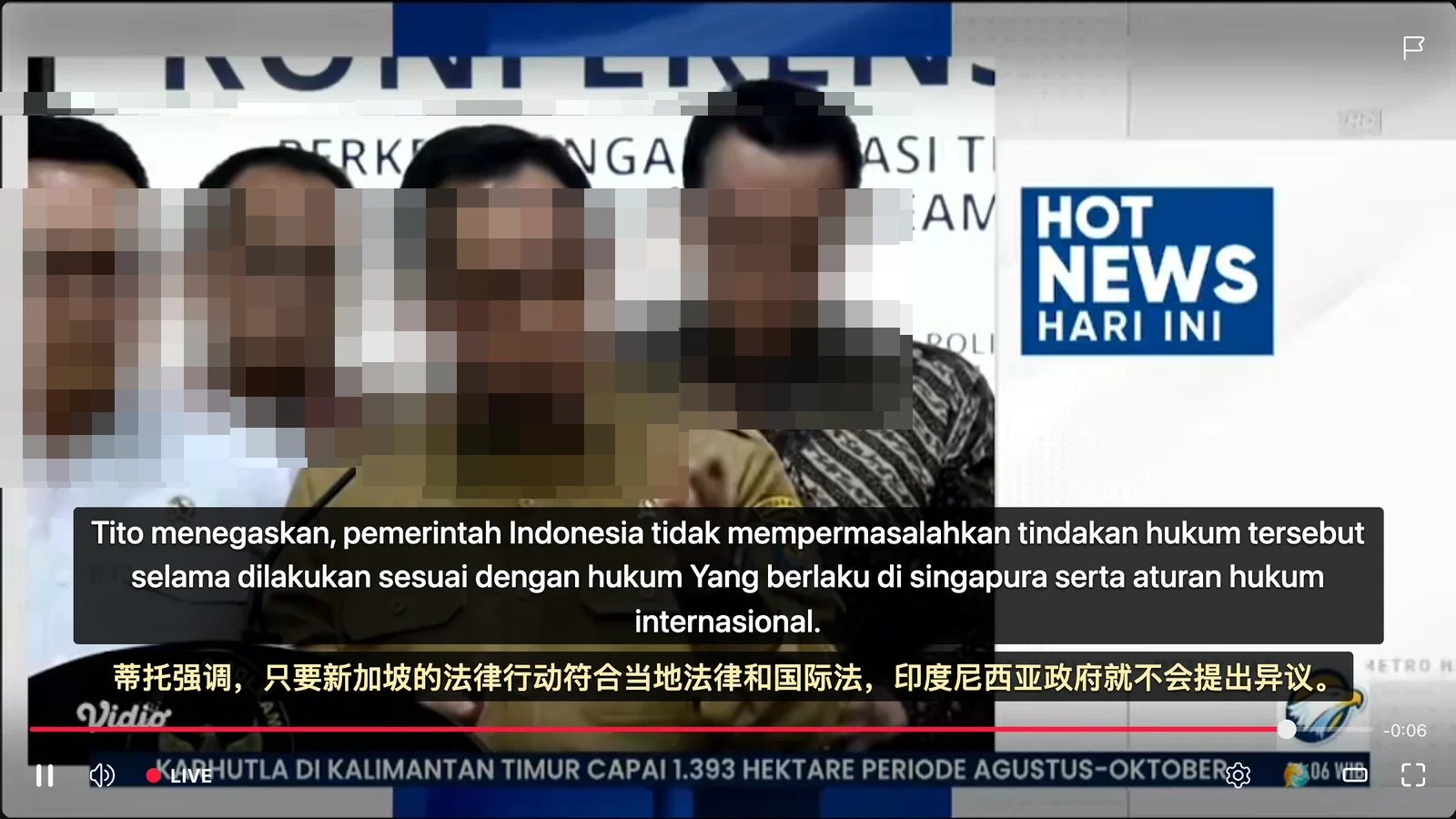
As shown on screen, the player displays both the original Indonesian text and the Chinese translation simultaneously at the lower-center. The value of this bilingual side-by-side display is that when commentators or news speakers talk quickly or mention player names, place names, or specialized terminology, viewers can reference the original Indonesian text to avoid misinterpretations caused by standalone machine translations of proper nouns.
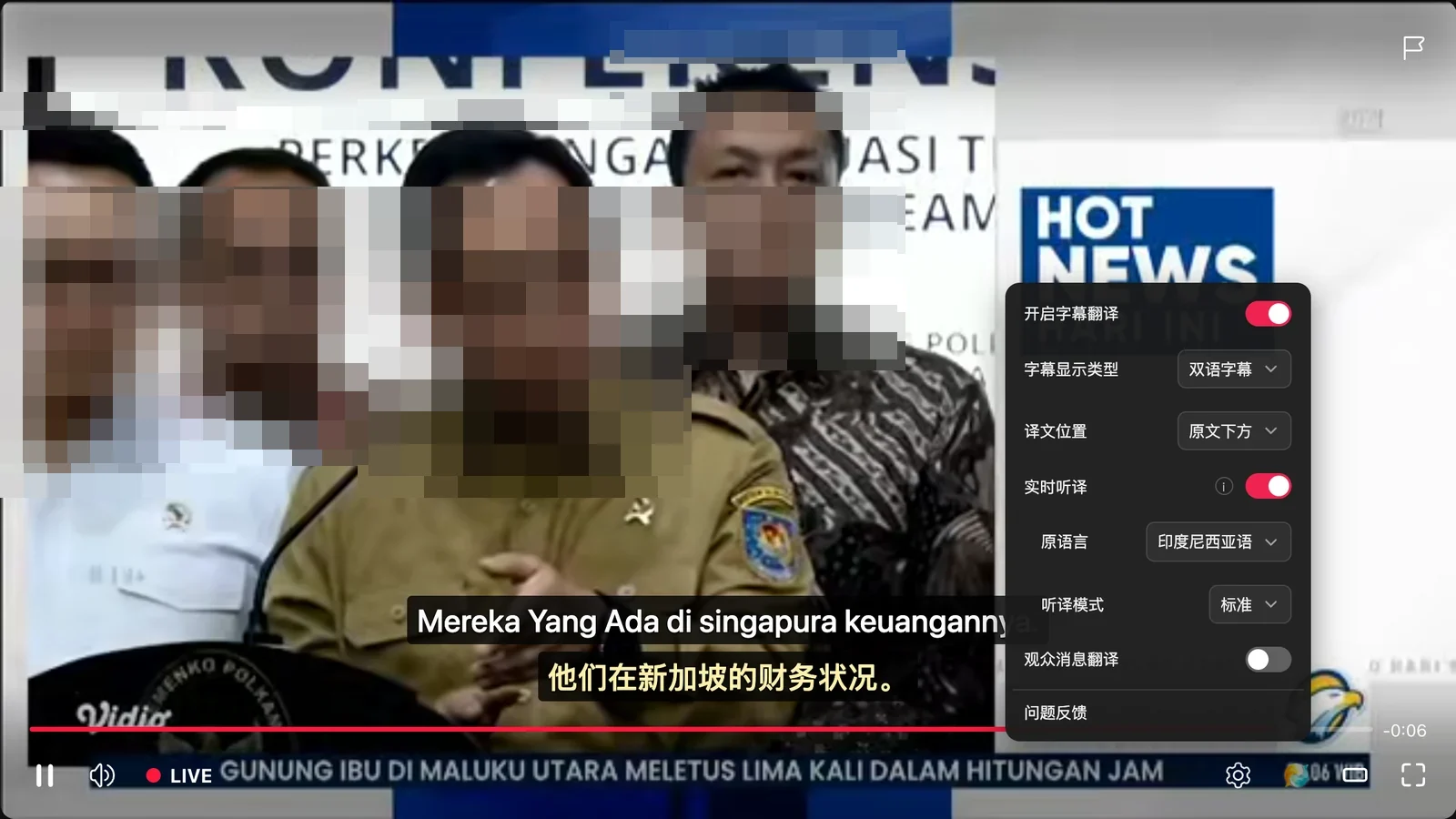
For subtitle appearance and layout, Equalang provides two display modes: 'Bilingual Subtitles' and 'Translation Only', and allows placing the translated text either 'Above Original' or 'Below Original'. Additionally, the extension's settings panel on Vidio livestreams includes a 'Viewer Message Translation' toggle (disabled during testing). Note that this feature is solely intended for reading incoming viewer messages; it does not post comments on your behalf or provide automated chat capabilities.
Practical Boundaries and Key Considerations
When using real-time audio translation tools on Vidio livestreams, several environmental and technical limitations should be kept in mind:
1. Noisy Backgrounds and Overlapping Speech
In live sports broadcasts like football matches, stadium chants, referee whistles, stadium echoes, and enthusiastic shouts from multiple commentators often intertwine. When ambient noise is overwhelming or multiple people speak at once, acoustic signals can be degraded, potentially leading to inaccurate sentence boundary detection or missed phrases. Furthermore, real-time translation must wait for a speaker to finish a semantically complete clause before segmenting and translating it accurately, which introduces an expected processing buffer interval between the live audio and the subtitle output.
2. Digital Rights Management (DRM) and Paid Encryption Restrictions
The Vidio player relies extensively on Digital Rights Management (DRM) technology. Many of the platform's sports livestreams and exclusive programs are transmitted via encrypted streams, and certain broadcasts require an active paid subscription plan. When a browser plays DRM-protected content (such as streams using secure mediaKeys pipelines), underlying copyright protection safeguards prevent third-party extensions from intercepting the decrypted audio stream, which stops real-time audio translation from working.
3. Regional Access Restrictions (Geo-blocking)
Many television channels and sports broadcast rights on Vidio are licensed specifically for audiences in Indonesia. When accessing the service from overseas, users may find certain livestreams blocked by geographical licensing restrictions or unavailable for playback.
Conclusion
On regional streaming platforms like Vidio that lack official subtitles, real-time audio translation extensions offer an effective way to lower the language barrier for live content by providing side-by-side original and translated subtitles. However, users should understand technical and environmental boundaries—such as platform DRM encryption, background audio noise, and geo-restrictions—to maintain realistic expectations while watching.
Sources
- Vidio Official Platform: https://www.vidio.com/
- Shaka Player Open Source Project: https://github.com/shaka-project/shaka-player
- Equalang Browser Extension (Real-Time Subtitles and Translation): https://equalang.com/extension