How to Read Japanese, German, and Non-English Patent PDFs: INID Codes, Claims, and Drawings Guide
 Equalang
In brief
A practical guide for R&D engineers and patent professionals on decoding WIPO INID front-page codes, publication kind codes (A/B/U), parsing Japanese and German claims, and matching technical drawings.
Keywords: patent translation, non-English patents, WIPO INID codes, Japanese patent claims, German patent claims

When conducting prior art searches, infringement assessments, or Freedom-to-Operate (FTO) analyses, R&D engineers and intellectual property (IP) professionals frequently face a daunting challenge: uncovering a highly relevant reference in databases like the European Patent Office's Espacenet, the Japan Patent Office's J-PlatPat, or Korea's KIPRIS—only to be confronted by an original PDF spanning dozens of pages entirely in Japanese, German, or Korean.
Patent documents carry a dual nature: they are both dense technical disclosures and strictly formalized legal instruments. Their front pages are covered with numeric codes, the claims are drafted under legal conventions as complex compound single sentences, and the detailed technical specifications are inextricably tied to reference numerals (such as first rotating shaft (102a)) that must be constantly cross-referenced against assembly drawings and tolerance tables at the end of the file.
To streamline both initial screening and in-depth examination of non-English patents, this guide breaks down the essential WIPO INID front-page codes, country-specific publication kind codes (distinguishing applications from granted patents), syntax strategies for dissecting Japanese and German claims, and a practical layout-preserving workflow for cross-referencing engineering drawings.
1. Decode the Front Page in 10 Seconds: Quick Reference for WIPO ST.9 INID Codes
Whether reviewing a publication from Japan, Germany, South Korea, or the European Patent Office, every bibliographic entry on the front page is preceded by an Arabic numeral in parentheses. These are INID codes (Internationally agreed Numbers for the Identification of Data), standardized under WIPO Standard ST.9. Mastering the following 12 core codes lets you parse the legal status and technical scope of a patent within seconds:
2. Distinguishing Applications from Granted Patents: Kind Codes (WIPO ST.16)
Engineers reviewing foreign patents often stumble over nomenclature: seeing Japanese terms like "Tokkyo Koho" (特許公報) on a title page, many assume the patent has already granted exclusive monopoly rights.
In reality, under the WIPO ST.16 standard, the kind code letter appended to the publication number defines the crucial legal boundary between an unexamined application publication (A) and an enforceable granted patent (B):
3. Dissecting Japanese and German Claims: The Three Structural Pillars
Patent claims define the legal boundaries of exclusivity. To satisfy strict drafting requirements across jurisdictions, patent attorneys construct them as stylized, single compound sentences spanning hundreds of words. Recognizing key syntactic pivot points makes even the most intricate claim readable:
1. Anatomy of an Independent Claim
A standard independent claim typically consists of a preamble (subject matter), a transitional phrase, and the body / characterizing portion (inventive technical features):
Tip for Japanese Word Order: In English, the claimed subject matter appears at the very beginning of the sentence (e.g., "An electrode assembly comprising..."). In Japanese, the subject matter is routinely placed at the very end of the paragraph before the final period (e.g.,
...ことを特徴とする電極組立体。). When reading a Japanese claim, jump straight to the last few words before the period to instantly determine whether the claim protects an apparatus (装置), a method (方法), or a program (プログラム).
2. Tracing Dependent Claim Dependencies
Recognizing dependency formulas allows you to reconstruct the claim tree rapidly:
- Japanese:
請求項1に記載の[主題]において、さらに…("The [subject matter] according to claim 1, further comprising...") or請求項1〜3のいずれか1項に記載の…("According to any one of claims 1 to 3..."). - German:
[Vorrichtung] nach Anspruch 1, dadurch gekennzeichnet, dass...("Apparatus according to claim 1, characterized in that...").
4. Preserving Layout and Reference Numerals: Workflow for In-Depth Patent Reading
When examining a multi-page Japanese or German patent PDF, the biggest bottleneck is rarely vocabulary alone; it is the cognitive friction caused by layout degradation. A single compound claim spanning hundreds of words gets severed across column breaks, or text reference numerals (like 102a) lose visual connection with their corresponding drawing callouts when dumped into plain-text translation tools.
In prior art searches and FTO analyses, an efficient workflow must resolve three critical layout challenges:
- Multi-Column Formatting and Cross-Page Reassembly: Nearly all major patent gazettes (such as JPO, DPMA, and EPO) format text in tight, two-column layouts. Copying and pasting raw text frequently leads to column collision or mid-sentence breaks across page boundaries. A layout-aware document translation tool reconstructs sentences across column and page splits before translating, preserving the exact conditional logic of the claims.
- Working Examples, Data Tables, and Chemical Equations: Patents in chemistry, materials science, and electronics rely heavily on comparative example tables and reaction schemes. Retaining the original table grid prevents numbers from shifting under the wrong header columns.
- In-Place Mapping of Drawing Callouts and Tolerances: Brief descriptions of drawings and engineering schematics require dimensions, tolerances, surface finishes, and callout arrows to remain aligned with physical components.
Here is an example evaluating a publicly available mechanical engineering drawing (Applied Kinetics) before and after layout-preserving translation:
| Mechanical Drawing Original (Page 1) | Equalang Document Translation (Side-by-Side Test) |
|---|---|
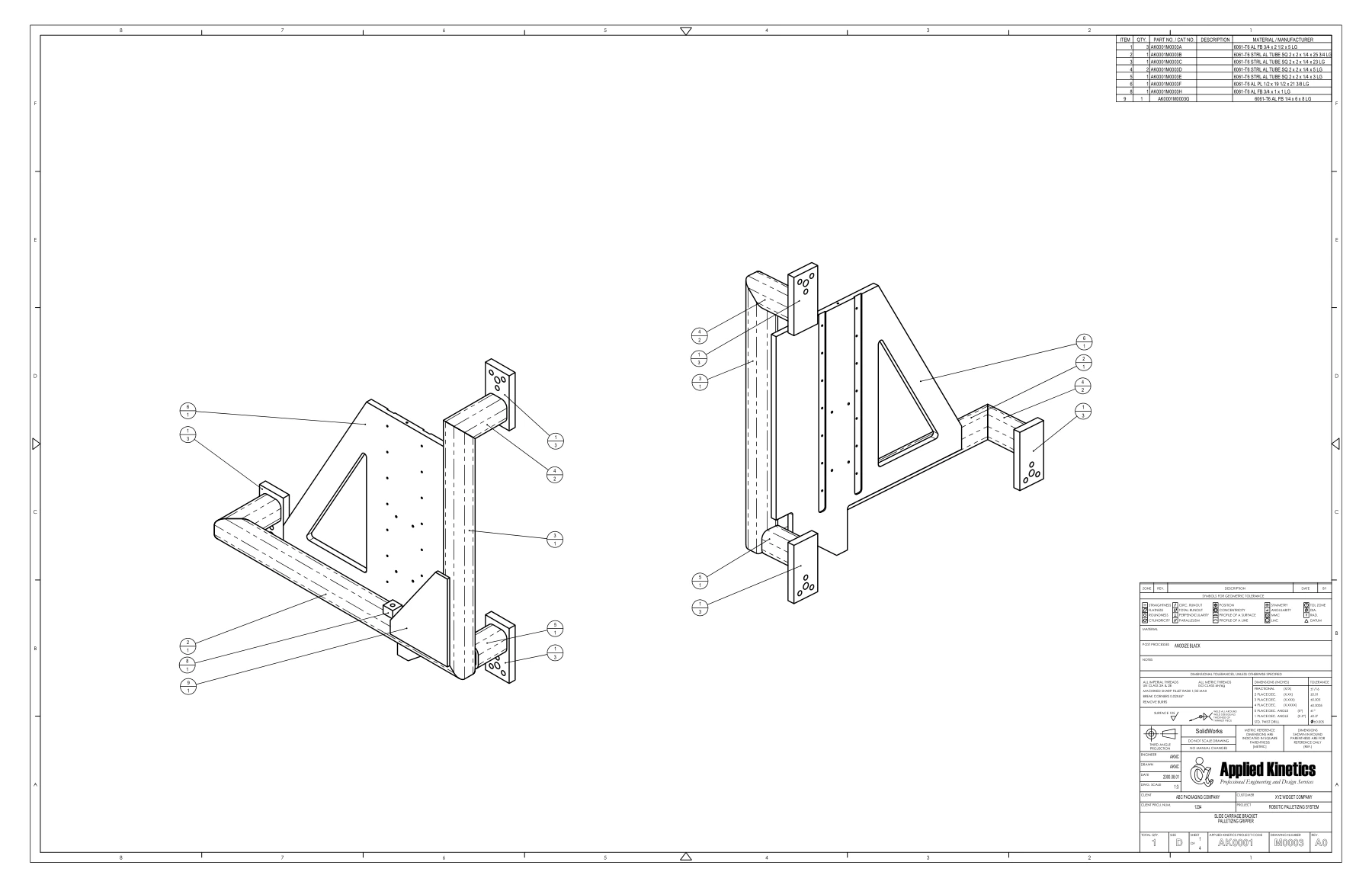 | 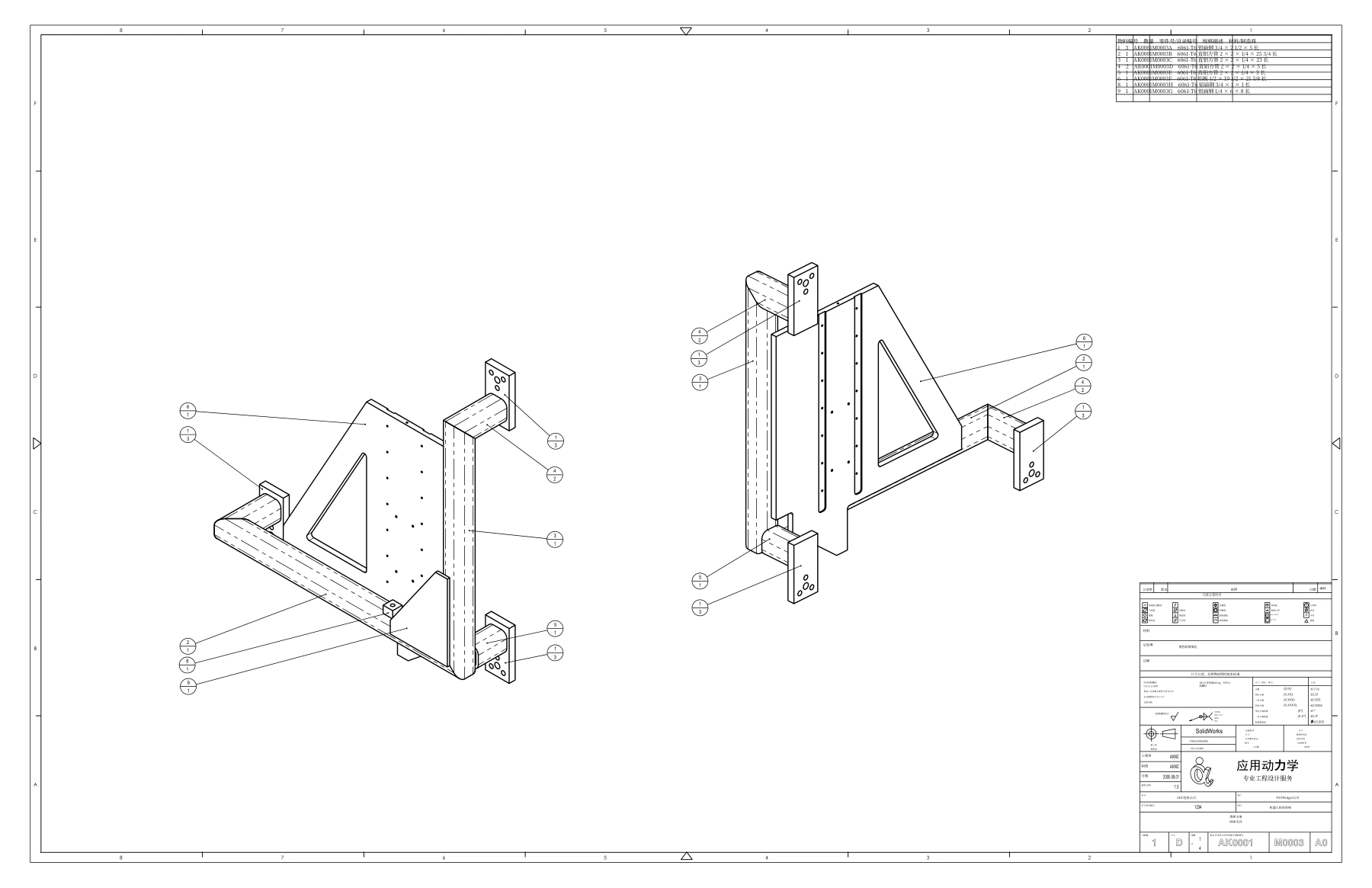 |
In this test, the layout of the two isometric views, the bill of materials (BOM) in the top right, and the title block in the bottom right all retain their original layout structure, eliminating the need to jump back and forth between disparate text files and drawings.
5. Best Practices for In-Depth Reading and Legal Verification
Machine translation paired with layout preservation can dramatically increase throughput during initial triage and technical landscape mapping. However, when preparing formal FTO opinions or invalidity contentions, strict professional verification protocols should be followed:
- Dual-Screen Verification: Display the translated reference on one screen to navigate technical concepts quickly, while keeping the official original PDF open on the second screen. Whenever you encounter a critical claim limitation (e.g.,
protrusion (14),valve seat (22)), visually verify the reference numerals against the original drawing callouts. - Understand Typographic Adjustments: Text density varies across languages. Translated text naturally expands or contracts, requiring subtle line wrapping or font adjustments. What matters is logical paragraph alignment and correct table cell correspondence, rather than pixel-for-pixel overlay.
- Always Check Boundary Terms Against the Original: The scope of protection hinges on specific qualifying terms. For instance, in Japanese, distinguish carefully between
実質的に("substantially"),以上 / 以下("inclusive of the boundary value"), and超える / 未満("strictly greater than / less than, exclusive of the boundary value"). In German, watch formindestens("at least") versusinsbesondere("in particular"—typically introducing non-limiting embodiments). Always cross-reference the original source text for dispositive phrasing. - Verify Legal Status and File Wrappers: Never rely solely on an unexamined published specification. Combine the document kind code (distinguishing 'A' from 'B' publications) with a search in official prosecution registers (file wrapper history) and check annuity payment status.
By combining an understanding of WIPO bibliographic codes and claim syntax with layout-preserving translation, R&D and legal teams can more efficiently complete non-English patent triage and feature mapping.
The translation screenshot in this guide was generated using Equalang.
Sources
- WIPO — Standard ST.9: Bibliographic Data on and relating to Patents (INID Codes): https://www.wipo.int/standards/en/pdf/03-09-01.pdf
- WIPO — Standard ST.16: Identification of Different Kinds of Patent Documents: https://www.wipo.int/standards/en/pdf/03-16-01.pdf
- Japan Patent Office (JPO) / INPIT — J-PlatPat Patent & Utility Model Number Inquiry and Gazette Reading Guide: https://www.j-platpat.inpit.go.jp/
- European Patent Office (EPO) — Espacenet Kind Codes Guide: https://www.epo.org/en/searching-for-patents/helpful-resources/first-time-here/kind-codes
- Applied Kinetics Sample Mechanical Drawing (M0003.pdf): https://www.appliedkinetics.ca/wp-content/uploads/2018/01/m0003.pdf