Can't Read Foreign OTC Cold Medicine Labels? Check Active Ingredients In-Place with Equalang Photo
 Equalang
In brief
Sick abroad and puzzled by foreign drugstore labels? Translate cold medicine ingredients and warning boxes directly in-place to verify dosages and avoid drowsiness risks.
Keywords: foreign OTC medicine; cold medicine photo translation; drug facts label; in-place photo translation; antihistamine drowsiness warning
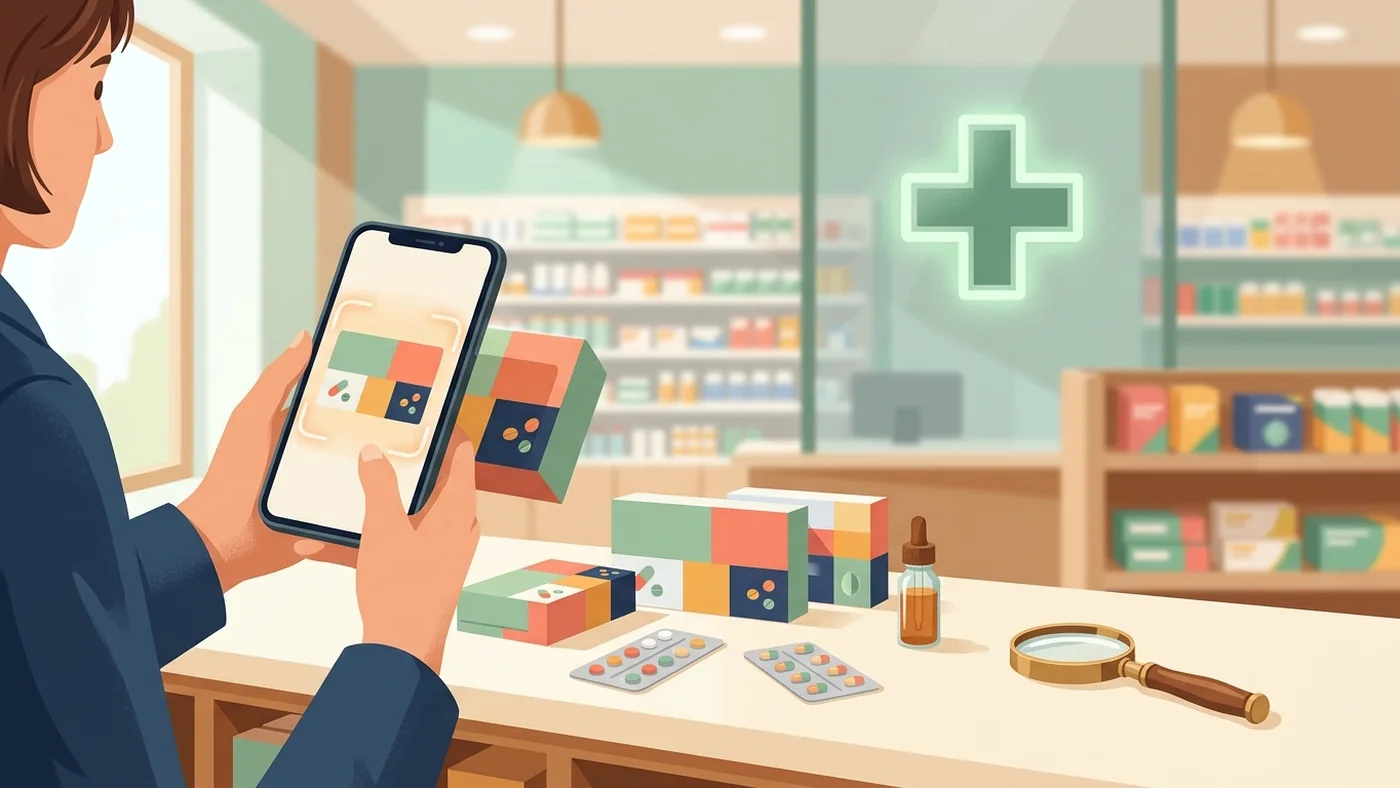
Few situations are more unsettling when traveling or working abroad than coming down with a sudden midnight fever, a pounding headache, or severe allergy symptoms.
You rush to a nearby drugstore or 24-hour pharmacy, only to stand in front of shelves filled with unfamiliar over-the-counter (OTC) medications packaged in a language you cannot read. Pick up a cold remedy, and the back of the box is crowded with dense chemical terminology, local scripts, and fine print. Doubts quickly set in: With an important business meeting tomorrow or a long highway drive ahead, does this medication contain sedating antihistamines that cause drowsiness? And if you have already taken a pain reliever or cold remedy you brought from home, will combining it with a local fever tablet cause an accidental overdose or liver toxicity from overlapping active ingredients?
Choosing an OTC medicine should never be based on marketing claims on the front of the box. What matters are the Active Ingredients, exact milligram dosages, and warning statements printed on the back. When dealing with unfamiliar packaging, the safest approach is to use in-place mobile photo translation—reconstructing the translated text directly inside the original ingredient tables and warning boxes for precise, line-by-line verification.
1. Why Text Drift in Standard Translation Apps Is Dangerous for Medicine Labels
When standing in a pharmacy aisle, most people naturally pull out their phone and take a picture with a standard photo translation app. However, traditional tools often produce chaotic layouts that make the results risky to rely on:
- White background patches and shifted lines: Generic translation apps typically slap solid white rectangular blocks over the original packaging, then float translated text on top. When dealing with tight "Active Ingredients & Quantities" tables, translated lines frequently drift vertically. A milligram number belonging to a fever reducer might shift next to a cough suppressant, making it difficult to determine the actual content of each compound.
- Fragmented warning statements: Crucial boxed warnings—such as "Do not drive after taking" or "Contraindicated during pregnancy"—are often chopped into disjointed sentence fragments. Without their clear regulatory and medical framing, these critical warnings are easily overlooked during a quick glance.
- No seamless toggle back to the original image: Safe dosing requires confirming numbers and international chemical names against the physical packaging. Many tools do not offer an instant way to toggle between the translation and the original photo, preventing you from cross-checking figures with the original text.
Medication safety directly impacts health. Translating drug packaging requires faithful layout preservation so that ingredients, exact milligram amounts, and contraindications remain strictly aligned with their original positions on the box.
2. Three Critical Standards for In-Place Medicine Packaging Translation
To evaluate foreign medications with confidence, a photo translation tool should meet three core technical standards:
- Precise background erasure and in-place overlay: Intelligently identify the underlying background color of the box, cleanly remove original text, and render the translation in a proportional font size directly in-place. Table row spacing and cell structures must remain intact without text spilling over or colliding.
- Strict preservation of chemical names and dosage units: Standard international active ingredient names and units such as micrograms (mcg) and milligrams (mg) must be strictly mapped without numeral corruption or unit distortion.
- Instant two-way toggle between original and translated images: Seamlessly switch between the original capture and the translated view on your screen, allowing you to quickly cross-reference foreign characters, lot numbers, and dosage figures against the physical box.
3. How to Check Cold Medicine Labels In-Place with Equalang in Three Steps
To address the demanding formatting requirements of drug labels and package inserts, our team designed Equalang Photo Translation with in-place erasure and typography reconstruction for dense text and tabular layouts.
When standing in front of shelves at an international pharmacy, you can verify key medication details in three straightforward steps:
Step 1: Open Photo Translation in Your Mobile Browser
Navigate to Equalang Photo Translation directly in your mobile browser.
Select your target language and tap Start Camera (or select a photo of the medicine box from your library).
Step 2: Frame the Ingredients and Warnings Section Clearly
Hold the box steady or rest it on a shelf counter. Align the camera with the "Active Ingredients" and "Warnings" sections on the back of the box, ensuring even lighting and crisp focus on the small print.
Here is a fictional sample medicine box created by our team:
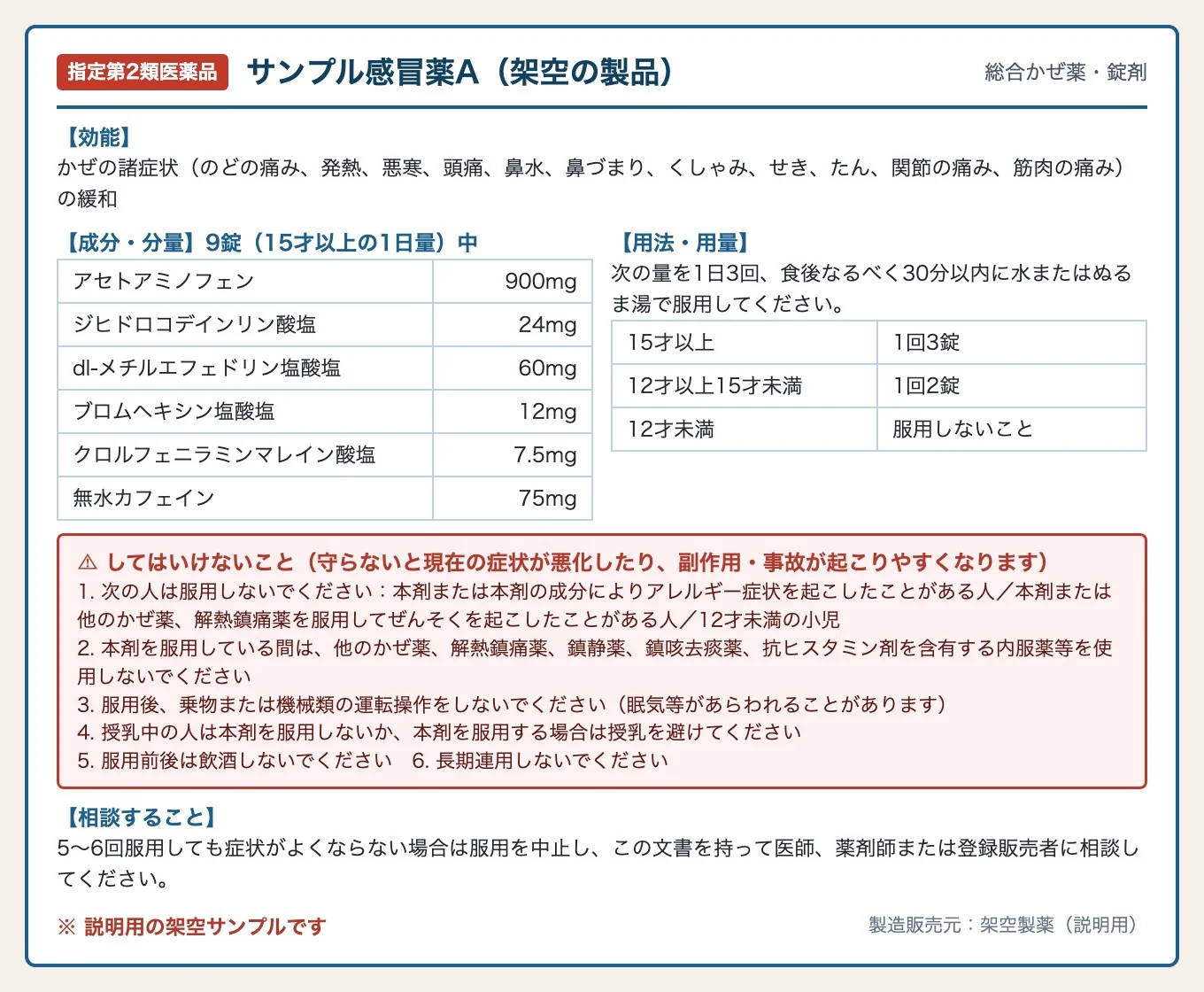
As shown on the fictional sample medicine box created by our team above, a prominent red warning box sits at the bottom, with a dense table listing active ingredients and their respective milligram amounts located above.
Step 3: Review the In-Place Translation to Verify Ingredients and Dosage
After uploading, the system automatically detects the source language, reconstructs the layout, and generates an in-place translated overlay:
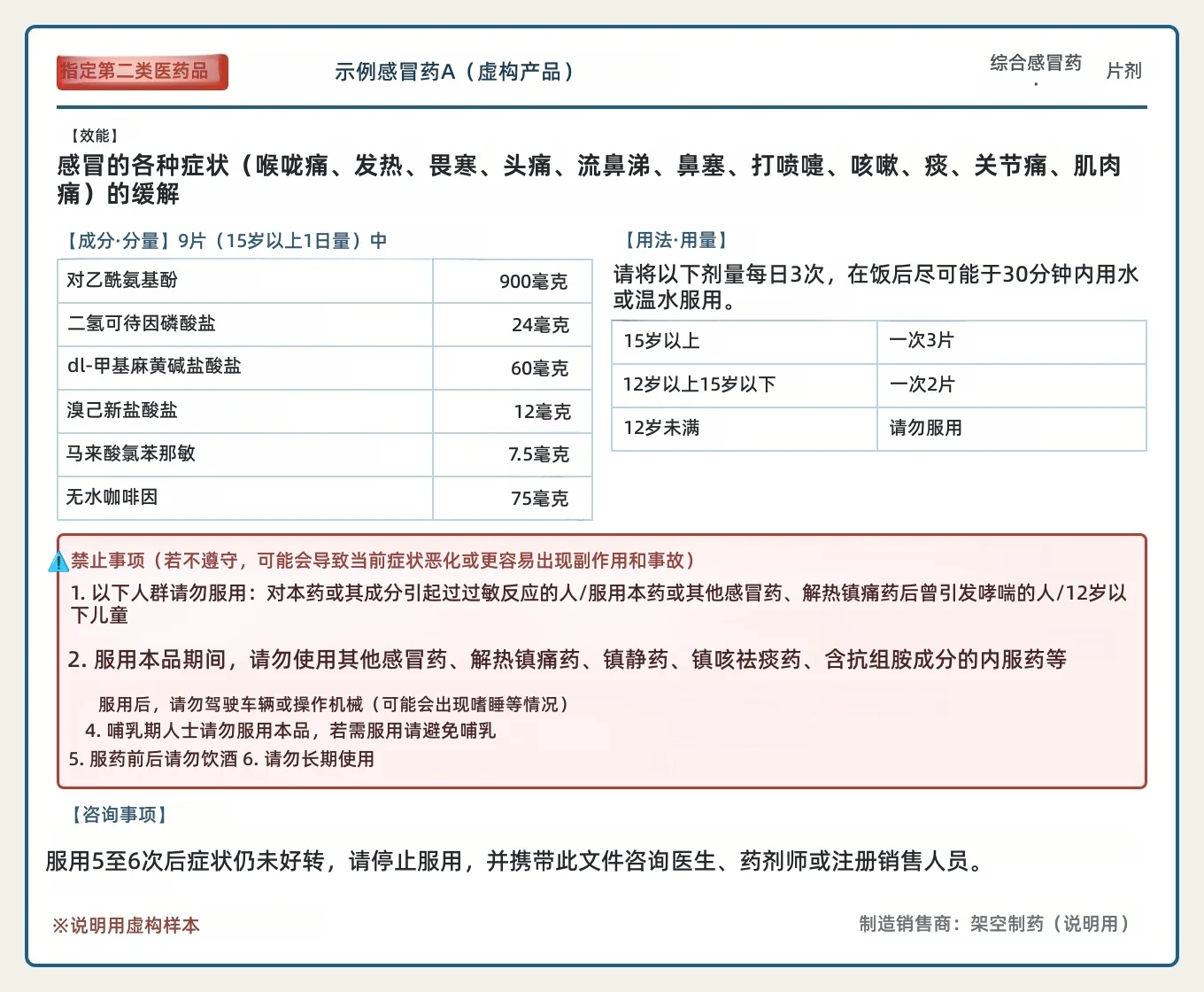
Examining the actual results of Equalang Photo Translation, the original background colors and borders remain intact. Contraindications and critical warnings in the red box at the bottom appear in their designated positions in Chinese; although clearly legible, item 3 lacks a number and font sizes vary across items. In the ingredients table, each active ingredient name and its exact milligram quantity remain aligned on the same row. Single-serving quantities and daily frequency limits are visible at a glance.
4. Four Medication Safety Checks When Buying Cold Remedies Abroad
Once you have generated an in-place translation, take a minute to review these four safety principles before purchasing or taking any medication:
- Distinguish single doses from total daily amounts: Foreign packaging may express dosages either per serving (e.g., "1 tablet contains XX mg") or as a daily total (e.g., "Daily dose of 6 tablets contains XX mg"). Check parenthetical notes carefully so you do not mistake a full day's maximum allowance for a single dose.
- Guard against accidental ingredient duplication: If you have already taken a pain reliever, cold remedy, or acetaminophen brought from home, check the translated ingredients list to ensure the new medication does not share the same antipyretic or analgesic compounds. Taking multiple products with overlapping active ingredients can quickly lead to toxic overdoses and liver damage.
- Verify drowsiness warnings and driving restrictions: If the translated warning box instructs users not to drive or operate machinery after consumption, the formula likely contains a first-generation antihistamine or another sedating agent. If you need to drive or work during the day, look for alternatives labeled as non-drowsy.
- Seek medical attention for high fevers or severe symptoms: OTC medications are intended only for temporary relief of mild symptoms. If a fever remains above 38.5°C (101.3°F), does not improve after 48 hours, or is accompanied by severe shortness of breath, chest pain, or a rash, do not increase the dosage on your own. Visit a local emergency room or medical clinic immediately.
Medication Safety Notice: This article and translation tool are intended for general reference during travel and daily life, and should never replace professional clinical advice from a licensed physician or pharmacist. Always verify official registration numbers, indications, and instructions on the original manufacturer packaging before taking any medicine.
When facing unexpected illness abroad, using your phone camera to read medicine labels in-place provides a clear, reliable way to make informed choices and protect your health on the road.
Sources
- Equalang Photo Translation: https://equalang.com/photo
- Pharmaceuticals and Medical Devices Agency (PMDA) Japan – OTC Drug Information: https://www.pmda.go.jp/
- U.S. FDA – OTC Drug Facts Label Guide: https://www.fda.gov/drugs/information-consumers-and-patients-drugs/otc-drug-facts-label