Moving to Japan: 30 Misleading Kanji Terms on City Hall Forms, Leases, and Clinic Questionnaires

Equalang

In brief

Avoid costly paperwork traps when moving to Japan. A practical breakdown of 30 deceptive kanji terms across city hall registrations, apartment leases, and medical intake forms.

Keywords: moving to Japan; Japanese city hall forms; Japan rental lease; important matters explanation; Japanese medical intake form; Japanese kanji false friends
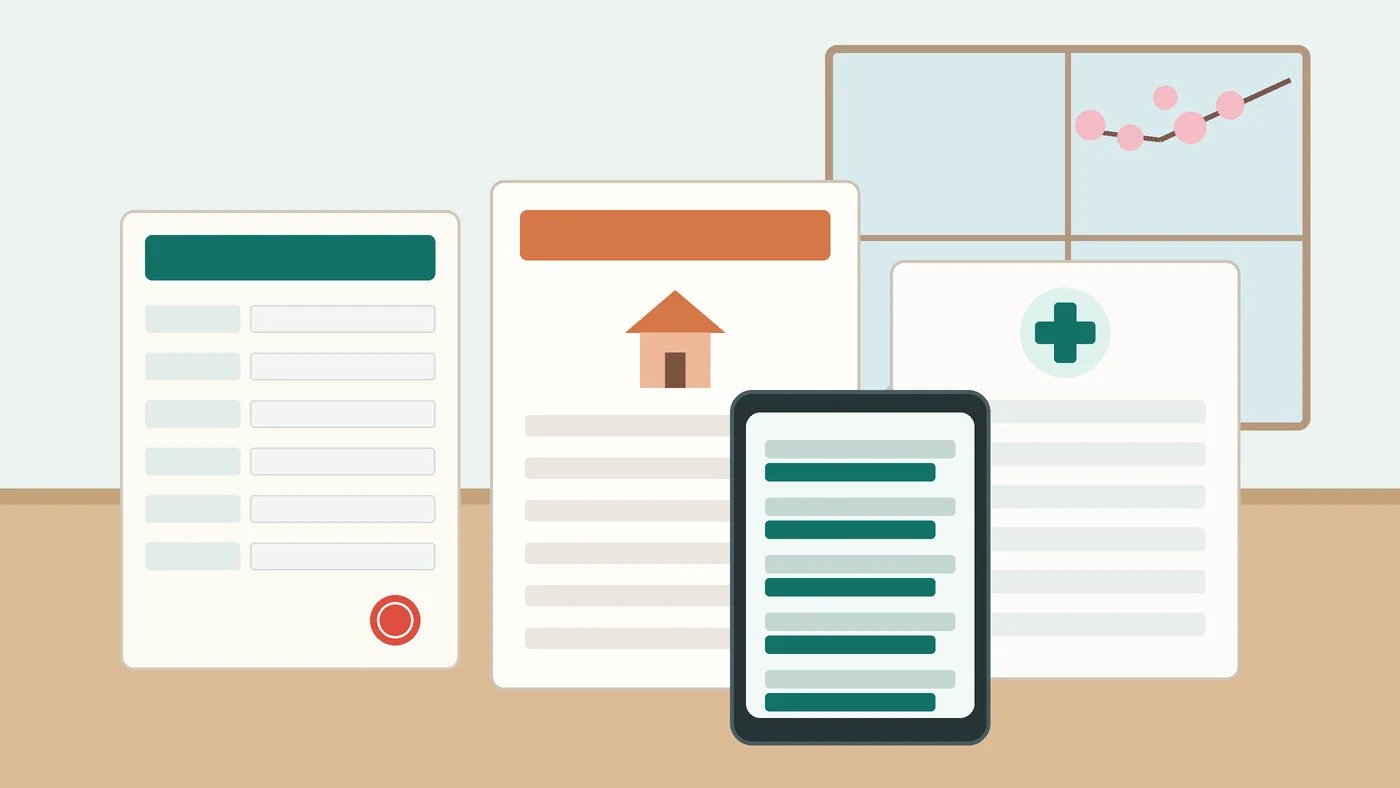
Illustration of Japanese city hall service counters, real estate lease contracts, and clinic intake forms
Three high-frequency paperwork scenarios when moving to Japan: City hall registration, apartment leases, and clinic intake forms

When relocating to Japan, it is easy to fall into a false sense of security—or complete disorientation—when encountering official paperwork. Official forms, street signage, and contracts rely heavily on dense kanji compounds. For newcomers, whether trying to decipher characters using dictionary apps or relying on character roots, administrative Japanese paperwork presents a minefield of misleading terminology. The reality sets in quickly: sitting before a ward office clerk trying to fill out a move-in notification, receiving a PDF of real estate disclosures (Jūsetsu) spanning dozens of pages, or being handed a clipboard with a paper medical questionnaire at a neighborhood clinic. Words that look deceptively simple or intuitive can carry entirely different legal or procedural meanings in practice.

Seeing a sign for an "自動精算機" (jidō seisanki) in a clinic lobby does not mean a machine for precision accounting—it is an automated payment kiosk. Seeing "原状回復" (genjō kaifuku) in an apartment lease does not obligate you to pay out-of-pocket to renovate an older apartment into a brand-new state upon moving out. And when a triage nurse asks, "痛み止めは大丈夫ですか" (Itami-dome wa daijōbu desu ka?), answering with a casual "Daijōbu" (thinking it means "I am fine") can easily lead medical staff to assume you are turning down necessary pain relief.

To help international professionals, researchers, and students navigate these high-stakes hurdles smoothly, we have compiled 30 of the most frequently misunderstood kanji terms across three primary scenarios: city hall administrative procedures, real estate leasing contracts, and clinic intake visits. We also share a practical on-site workflow for handling complex paper forms and lengthy legal disclosures.

1. City Hall and Tax Registration: 10 High-Frequency Administrative Terms

During your first two weeks in Japan, you are required to visit your local municipal office (ward office / kuyakusho or city hall / shiyakusho) to register your address, enroll in National Health Insurance, and process your Individual Number (My Number). Space on these forms is tight, and bureaucratic phrasing is highly condensed. Making a mistake often means losing your place in line or facing miscalculated insurance premiums and tax assessments later.

Japanese Term (Kanji)ReadingCommon MisinterpretationActual Meaning & Filing Guidance
転入届てんにゅうとどけ (tennyū-todoke)"Transfer-in notice" (passive receipt)Move-in Notification (Residence Registration Form). A mandatory administrative filing you must submit in person within 14 days of arriving in Japan or moving between municipalities.
住民票じゅうみんひょう (jūminhyō)"Resident voting ballot" or "Resident entry pass"Certificate of Residence. The official government record of your current address, household composition, and residency status. Banks and landlords typically require an original issued within the last 3 months.
世帯主せたいぬし (setainushi)"Generational master" or "Landlord"Head of Household. If you live alone as a student or professional, write your own name here. In the relationship field (続柄), write 本人 (hon-nin, meaning "self").
続柄つづきがら (tsuzukigara)"Affiliation sequence" or "Continuation handle"Relationship to Head of Household. Indicates how the applicant is related to the household head—e.g., 本人 (hon-nin / self), 夫 (otto / husband), 妻 (tsuma / wife), or 子 (ko / child).
マイナンバーまいなんばー (mai nanbā)"My mobile phone number"Individual Number (My Number). A permanent, statutory 12-digit social security and tax identification number. Never write your personal telephone number in this field.
国民健康保険こくみんけんこうほけん (kokumin kenkō hoken)"Healthcare restricted solely to Japanese citizens"National Health Insurance (NHI). Mandatory for all mid- to long-term foreign residents not enrolled in an employer-sponsored health plan (shakai hoken). The standard out-of-pocket co-pay for medical treatments is 30%.
控除こうじょ (kōjo)"Deduction penalty" or "Removal / dismissal"Tax Deduction / Tax Relief. Statutory allowances subtracted from your gross income before tax calculation (e.g., basic deduction, dependent deduction). Higher deductions lower your total tax liability.
所得しょとく (shotoku)"Gross salary / total pre-tax earnings"Net Taxable Income (after deductions). Shūnyū (収入) refers to gross income before taxes, whereas shotoku (所得) is your net taxable earnings after standard deductions. Mixing them up can cause significant calculation errors on tax filings.
非課税証明書ひかぜいしょうめいしょ (hikazei shōmeisho)"Tax evasion record" or "Uncertified tax status"Tax Exemption / Low-Income Certificate. Official certification that you had no taxable local income during the preceding fiscal year. Crucial for students, postdocs, and dependents applying for tuition exemptions, health premium reductions, or visa renewals.
印鑑登録いんかんとうろく (inkan tōroku)"Registering an everyday personal stamp"Official Seal Registration (Jitsuin). The legal registration of your personal seal at City Hall, required for major contracts (purchasing real estate, auto loans, incorporation). Routine parcel delivery stamps (mitome-in) do not require this registration.

2. Real Estate and Apartment Leases: 10 Critical Financial and Liability Clauses

Before signing a residential lease in Japan, a licensed real estate transaction specialist (Takken-shi) is legally required to explain and deliver two lengthy documents: the Explanation of Important Matters (重要事項説明書, or Jūsetsu) and the Lease Agreement (賃貸借契約書). These documents govern your upfront move-in costs, who pays for ongoing repairs, and whether you will get your security deposit back when vacating.

Japanese Term (Kanji)ReadingCommon MisinterpretationActual Meaning & Practical Guidance
重要事項説明書じゅうようじこうせつめいしょ (jūyō jikō setsumeisho)"General tenant information brochure"Explanation of Important Matters (Jūsetsu). A binding statutory legal disclosure detailing property ownership, structural equipment, termination fees, and usage rules. Always review this thoroughly before signing the lease.
敷金しききん (shikikin)"Carpet or flooring fee"Security Deposit. Held by the landlord and refunded upon moving out, minus repair costs for tenant-caused damage. Landlords are legally prohibited from deducting for natural wear and tear.
礼金れいきん (reikin)"Small thank-you tip or courtesy gift"Key Money (Gratuity Fee). A non-refundable upfront payment made to the landlord at signing. You will never recover this fee upon move-out. If working within a tight relocation budget, prioritize "Reikin 0" properties.
仲介手数料ちゅうかいてすりょう (chūkai tesūryō)"Discretionary errand or processing fee"Brokerage Commission. The real estate agency's service fee. By law, this is capped at a maximum of one month's rent plus consumption tax.
保証会社ほしょうがいしゃ (hoshō gaisha)"Home warranty / property repair insurer"Rent Guarantor Company. A joint-liability guarantee firm required for renters who do not have a Japanese national joint guarantor (rentai hoshōnin). Initial enrollment fees generally run between 50% and 100% of one month's rent.
原状回復げんじょうかいふく (genjō kaifuku)"Fully renovating the older property back to brand-new condition"Restoration to Original Condition (Tenant Damage Liability). Under Ministry of Land, Infrastructure, Transport and Tourism (MLIT) guidelines, natural aging and sunlight discoloration are the landlord's responsibility; tenants are only liable for negligent, abnormal, or intentional damage.
特約事項とくやくじこう (tokuyaku jikō)"Special promotional discounts or bonus perks"Special Provisions / Addenda (High-Risk Section). Clauses overriding default standards, frequently stipulating mandatory move-out cleaning fees or early termination penalties (e.g., forfeit 1–2 months' rent if vacating within 12 months).
手配てはい (tehai)"Hand delivery / personal allocation"Arrangement / Setup / Scheduling. If your contract or agent notes "Suidō・denki no tehai wa go-jishin de", it means you must contact the utility providers yourself to set up water and electricity.
大家 / 貸主おおや / かしぬし (ōya / kashinushi)"Large house / borrower"Landlord / Property Owner / Lessor. Ōya-san refers directly to the individual landlord, while kashinushi is the legal term for the lessor in contractual documents.
更新料こうしんりょう (kōshinryō)"Fee for upgrading appliances or furniture"Lease Renewal Fee. Most standard residential leases in Japan run for 2 years. Renewing the lease often incurs a fee equal to roughly one month's rent (especially standard in the Kanto / Tokyo region).

3. Clinics, Hospitals, and Pharmacies: 10 Essential Medical Terms

When feeling unwell and visiting a local Japanese clinic (kurinikku) or hospital, the reception desk will hand you a clipboard holding a paper Medical Questionnaire (問診票, monshinhyō), packed with specialized medical and historical terms.

Japanese Term (Kanji)ReadingCommon MisinterpretationActual Meaning & Clinical Guidance
問診票もんしんひょう (monshinhyō)"Outpatient queue ticket"Medical Intake Questionnaire. The foundational document doctors use to determine diagnosis and prescriptions. It collects your chief complaint, symptom onset, drug allergies, medical history, and pregnancy/nursing status.
大丈夫だいじょうぶ (daijōbu)"All-powerful / fine" leading to ambiguous yes/no answers"I am fine / No need" vs. "Yes, please". When a nurse asks "Itami-dome wa daijōbu desu ka?" (Do you need a painkiller?), replying "Daijōbu" can easily be mistaken for declining pain relief. Respond explicitly with "Hai, onegaishimasu" (Yes, please) or "Kekkō desu" (No, thank you).
精算せいさん (seisan)"Precision audit" or "Detailed calculation"Payment Settlement / Checkout. After your consultation, you pay your medical bill at the reception desk or scan your consultation ticket barcode at an automated payment kiosk (Jidō Seisanki).
処方箋しょほうせん (shohōsen)"Treatment instructions memo"Doctor's Prescription Slip. Japan strictly separates clinical practice from drug dispensing (iyaku bumpō). You must present this slip at an external dispensing pharmacy (chōzai yakkyoku) within its strict 4-day validity window (including weekends).
お薬手帳おくすりてちょう (okusuri techō)"Prescription cost ledger"Personal Medication Record Book. Used by pharmacies to cross-check prescription histories, avoid duplicate medications, and prevent harmful drug interactions. Presenting it also earns a minor reduction in dispensing management fees.
ジェネリックじぇねりっく (jenerikku)"Generic low-grade commodity"Generic Prescription Medication (Kōhatsu Iyakuhin). Contains identical active ingredients and therapeutic effects as brand-name drugs at a significantly lower price point. Check the box marked "希望する" (Kibō suru / Desired) on your intake form.
既往歴きおうれき (kiōreki)"Past travel history"Past Medical History / Pre-existing Conditions. Significant past chronic illnesses, major operations, or previous hospitalizations.
副作用ふくさよう (fukusayō)"Secondary beneficial effect"Side Effects / Adverse Drug Reactions. If you have experienced allergic reactions or adverse effects to antibiotics (e.g., penicillin) or NSAID pain relievers, you must record them here.
頓服とんぷく (tompuku)"Pause briefly before swallowing"Take as Needed / PRN Medication. Not taken on a fixed three-times-daily schedule; taken only when acute symptoms flare up (e.g., high fever, migraine), with strict adherence to minimum spacing intervals.
紹介状しょうかいじょう (shōkaijō)"Job introduction letter"Medical Referral Letter. Under Japan's healthcare system, visiting a large general hospital without a referral letter from a primary care clinic incurs an additional out-of-pocket surcharge (Sentei Ryōyōhi), often amounting to several thousand yen.

4. On-Site Workflow: Handling Paper Forms and Long Contracts with Confidence

When sitting in a municipal office waiting area or clinic lobby facing complex paperwork, or reviewing a rental disclosure spanning dozens of pages sent by a leasing agent, guessing meanings from kanji or skimming through unfamiliar terms creates serious legal and financial risks. Here is an effective 3-step practical workflow:

1. Paper Questionnaires and Administrative Forms: In-Place Photo Translation

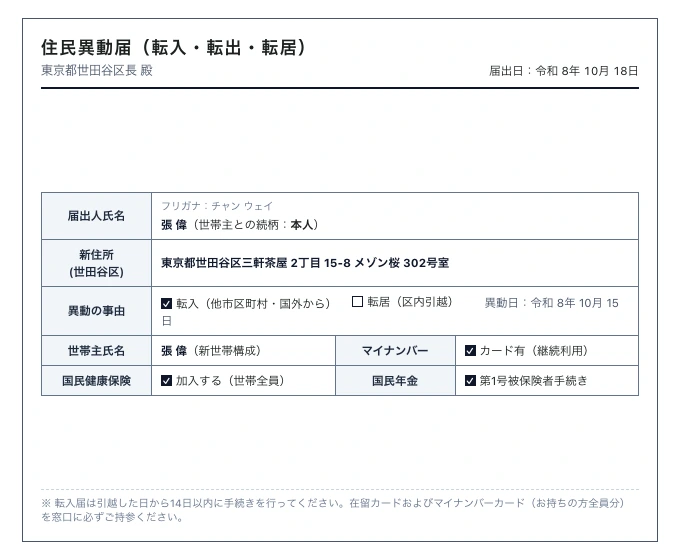
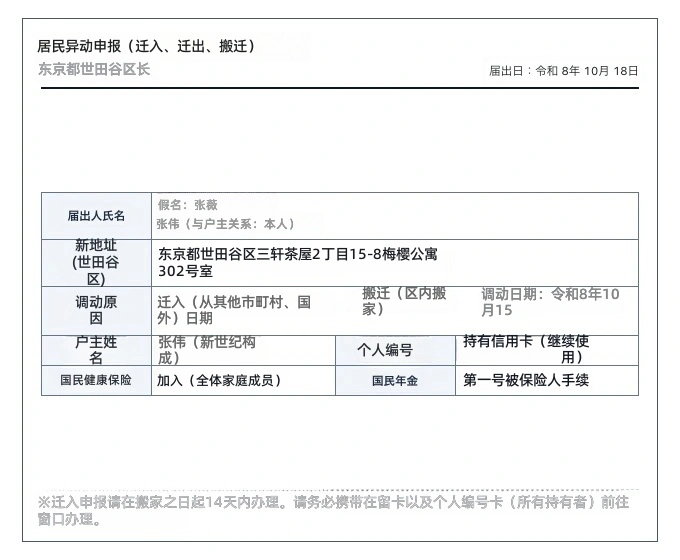
Typing complex Japanese kanji or furigana into a dictionary app by hand on a paper form is painfully slow and prone to typographical errors. Using an in-place camera translation tool like Equalang Photo, you can capture the physical form and have the translated text overlaid directly above the corresponding Japanese form fields. This allows you to verify the exact meaning of every check-box and entry requirement before putting pen to paper. Taking a sample ward office Jūmin Idō Todoke (Moving-in / Address Change Notification) form created by our team as an example, the image below illustrates the comparison between the sample form and the in-place translated version:

Sample Japanese Ward Office Move-in Notification Form Created by Our Team (住民異動届)Equalang Photo In-Place Translation Sample
Sample Japanese ward office Move-in Notification form created by our teamEqualang Photo translation of team-created sample form into Chinese

2. Multi-Page Rental Disclosures and Contracts: Layout-Preserving Full Document Review

Real estate Jūsetsu disclosures and rental contracts often span dozens of pages, characterized by multi-column legal text, tables, and fine-print footnotes. Copying and pasting snippets into general translation boxes fragments legal clauses and strips away vital context. A more dependable approach is using a layout-preserving document translation tool to generate a bilingual reference copy. Reviewing the Japanese original and the translated version side by side allows you to zero in on the two highest-risk sections: Special Provisions (特約事項) and Contract Termination (契約の解除), where you can verify deposit deduction rules, mandatory cleaning charges, and notice periods for early termination.

3. Service Counter and Consultation Dialogue: Real-Time Split-Screen Communication

Explaining nuanced medical symptoms at a clinic or discussing administrative requirements with a fast-speaking ward office clerk can be challenging. A split-screen, face-to-face translation tool placed flat on the counter allows both parties to speak naturally in their respective native languages, displaying real-time dual-language transcripts simultaneously. Taking the verification of health insurance cards and intake questionnaires at a Japanese community clinic reception desk as an example, the image below illustrates the effect of the dual-language transcript:
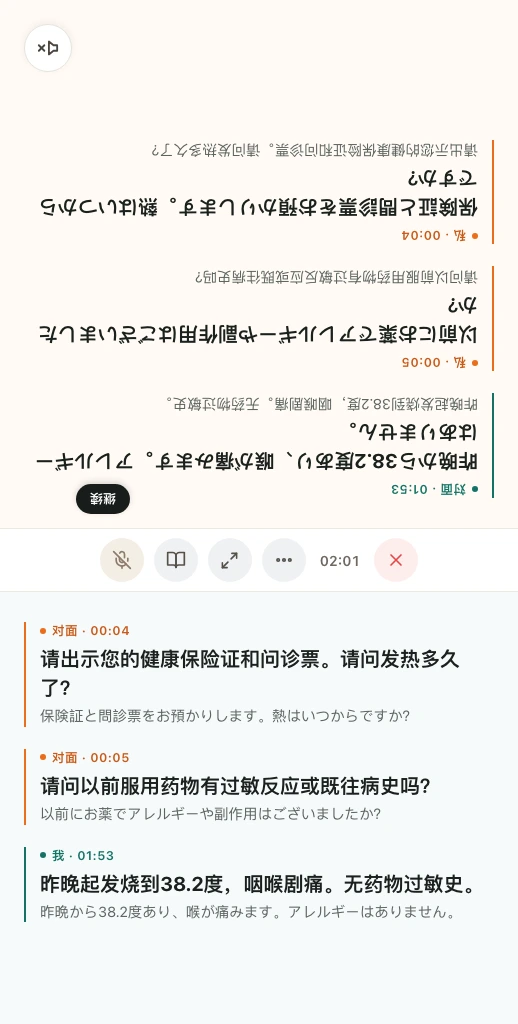
Equalang face-to-face simultaneous translation illustrative diagram, showing Japanese clinic reception inquiry about the intake questionnaire and patient describing fever and sore throat in Chinese
Equalang face-to-face translation illustrative diagram: Real-time dual-language comparison between Japanese clinic reception inquiry and Chinese initial consultation description

5. Pre-Signature Safety Checklist: 4 Essential Checks

No matter what translation tools you use to clarify document contents, take two minutes to conduct a manual check against the original Japanese document before signing or submitting:

  1. Verify Numbers, Currencies, and Units: Check whether fees are quoted in Yen (円) or Ten-Thousand Yen (万円, man-yen), and verify decimal points. On medical forms, double-check that vital metrics like body temperature (e.g., 38.2℃), weight, and medication dosing intervals match the Arabic numerals on the original questionnaire.
  2. Confirm Era Names vs. Western Calendar Years: Japanese official forms routinely use the imperial era (Gengō). For reference, 2026 is Reiwa 8 (R8), and 1995 is Heisei 7 (H7). Check whether the form header expects YYYY/MM/DD or provides selectable bubbles for 昭和 (Shōwa) / 平成 (Heisei) / 令和 (Reiwa).
  3. Ensure Consistency in Name Spelling and Phonetic Readings (Furigana): While your residence card displays your legal name in Roman letters (or standard kanji), Japanese forms almost always feature a pronunciation line above your name: "フリガナ" (requires Katakana) or "ふりがな" (requires Hiragana). Save your standardized Japanese phonetic spelling in your phone's notes app to maintain consistent records across government offices, utility providers, and financial institutions.
  4. Scrutinize the "Special Provisions" (特約事項) in Lease Agreements: After reading through your translated reference document, always return to the original 特約事項 clause in the Japanese contract. Confirm the exact yen amount for move-out cleaning, verify pet policies, and check whether early lease termination incurs penalty fees.

Keeping these 30 terms in your notes and applying a structured review method will help you avoid costly misunderstandings, safeguard your rights, and handle official Japanese paperwork with confidence.

The translation screenshots in this guide were generated using Equalang Photo.

Sources