Inside SYSTRAN: Terminology, Deployment, and Equalang
 Equalang
In brief
An overview of SYSTRAN Translate Pro, Server, and API features, and how they compare with Equalang for layout-focused document translation and reading.
Keywords: SYSTRAN, Translate Pro, machine translation, translation memory, on-premise translation, Equalang
Translating specialized workplace files frequently presents two distinct challenges: technical terms and organization-specific abbreviations can easily drift away from standardized usage, while documents with intricate visual formatting often experience layout breakage after translation, requiring substantial manual cleanup.
To address demands for terminology governance and data compliance, machine translation provider SYSTRAN maintains a product portfolio spanning cloud SaaS, on-premise servers, and developer APIs. This article analyzes SYSTRAN's core functional architecture based on official product specifications and examines how it compares with our tool, Equalang, across different daily workflows.
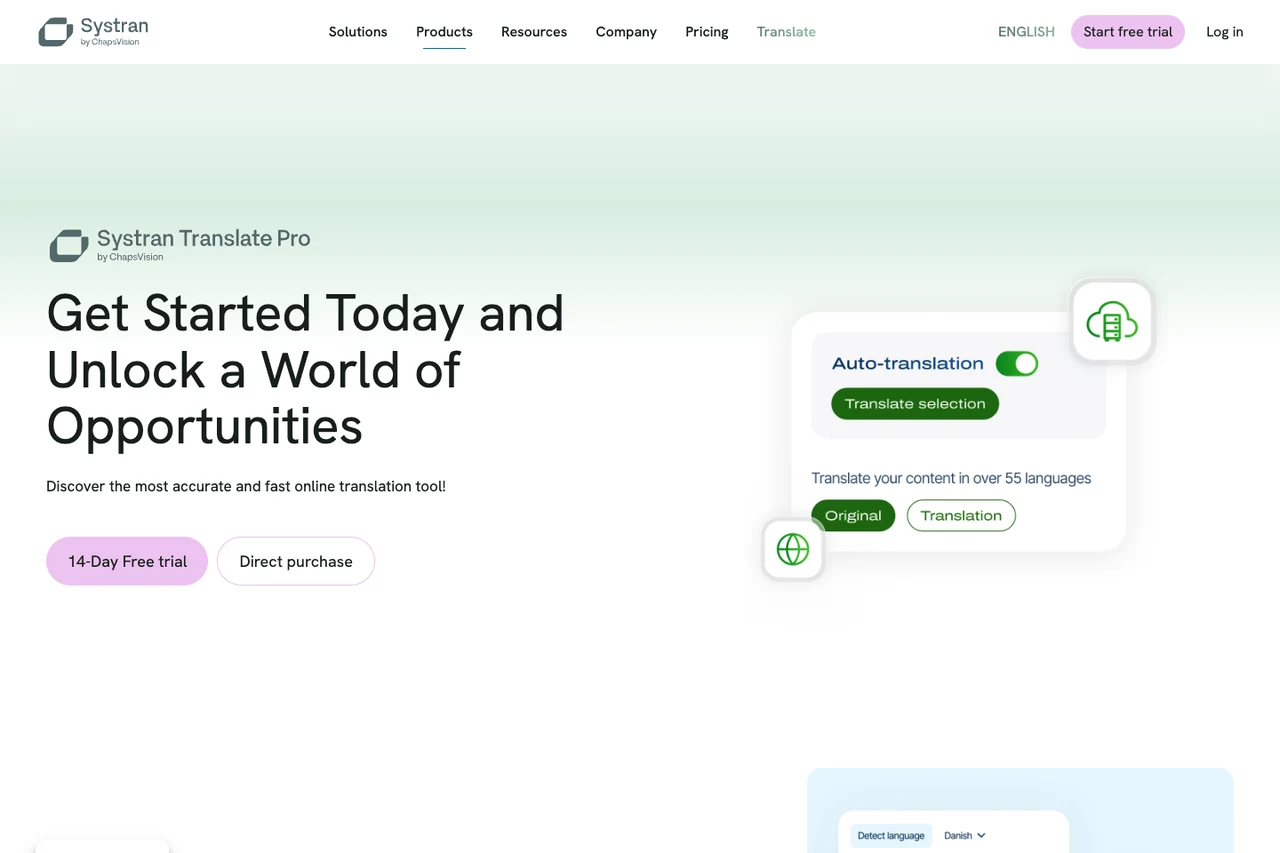
SYSTRAN Core Architecture: Pro, Server, and Cloud
SYSTRAN structures its machine translation offerings across several deployment tiers designed for varying organizational requirements:
- Translate Pro: A cloud-based SaaS tool designed for professionals and teams. Users can translate plain text directly in their browser or upload office documents, including Word, PowerPoint, Excel, and PDF files. In addition to general translation engines, the platform offers 12 domain-specific translation models covering industries such as finance, life sciences and healthcare, manufacturing, IT, and legal compliance.
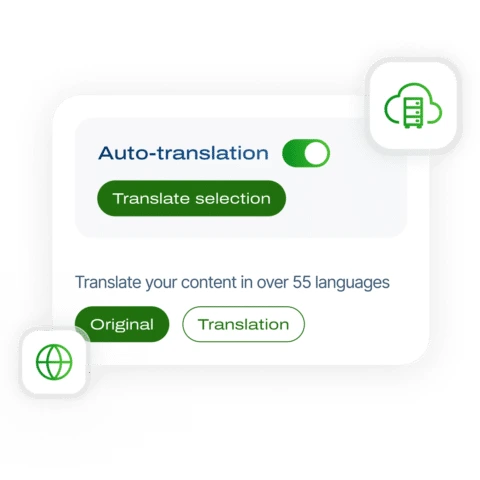
Official promotional illustration from SYSTRAN's Translate Pro page showing tool ecosystem.
- Translate Server: An on-premise solution built for organizations with strict data governance policies. The server software installs directly within a company's internal infrastructure and behind its firewall, allowing the organization to control update schedules and keep confidential documents strictly within its local corporate network.
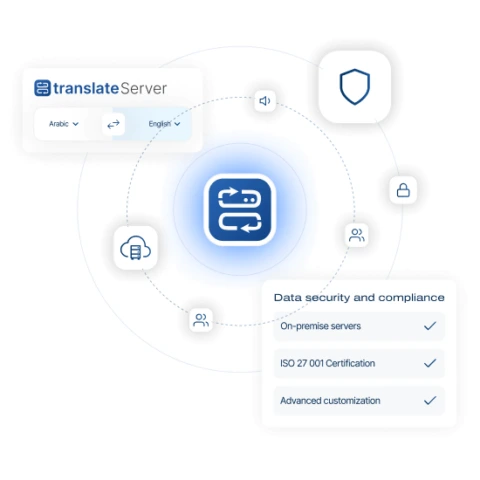
Official promotional illustration from SYSTRAN's Translate Server page showing infrastructure integration.
- Private Cloud: A dedicated cloud environment distinct from on-premise physical servers. While hosted by the provider, it delivers isolated single-tenant compute resources for organizations requiring cloud-managed infrastructure alongside dedicated tenant boundaries.
- Translate API: A unified RESTful API available across Pro, Server, and Private Cloud tiers. It enables developers to integrate automated text and batch document translation into internal ticketing platforms, knowledge bases, CRM systems, and multilingual content pipelines.
Linguistic Customization: Glossaries, TMs, and Rule Dictionaries
For teams seeking consistency across repetitive documentation, SYSTRAN provides structured tools to maintain organizational terminology:
- Glossaries and Translation Memories: Users can upload existing bilingual glossaries and translation memory assets to help standardized phrasing recur consistently across translation outputs.
- Advanced User Dictionaries: Going beyond standard term substitution, advanced dictionaries accommodate morphological variations, homographs, and inflection rules. Organizations can define contextual guidelines to control how technical nouns behave across varying grammatical forms.
- Domain Model Adaptation: Within the Translate Server environment, organizations can train and adapt custom models using their proprietary bilingual corpora to align with specific corporate vocabularies.
While these configuration mechanisms establish structured controls for corporate jargon, practical translation remains subject to context ambiguity. Maintaining dictionary rules requires ongoing human review and tuning; rule systems alone do not guarantee completely error-free terminology across every sentence structure.
Contrasting Equalang and SYSTRAN: Workflow Considerations
Unlike software centered on administrative dictionary management and enterprise deployment infrastructure, Equalang focuses on providing an accessible, layout-preserving, and side-by-side reading experience for professionals, researchers, and everyday knowledge workers.
While both platforms handle standard document formats, their operational emphases diverge:
- Visual Formatting and Complex Documents: While SYSTRAN Translate Pro supports bulk Office and PDF conversions, Equalang Document Translation concentrates heavily on visual layout fidelity for intricate PDFs and presentations. For PDFs, Equalang supports multi-column layouts, headers, footers, captions, and paragraph hierarchies, reconnecting split sentences severed across page breaks before translation, and reconstructing structural tables (including merged cells and multi-row headers) as well as mathematical formulas. For PPTX presentations, text automatically shrinks within bounding boxes when translations expand, mitigating text overflow while preserving inline styling and title consistency.
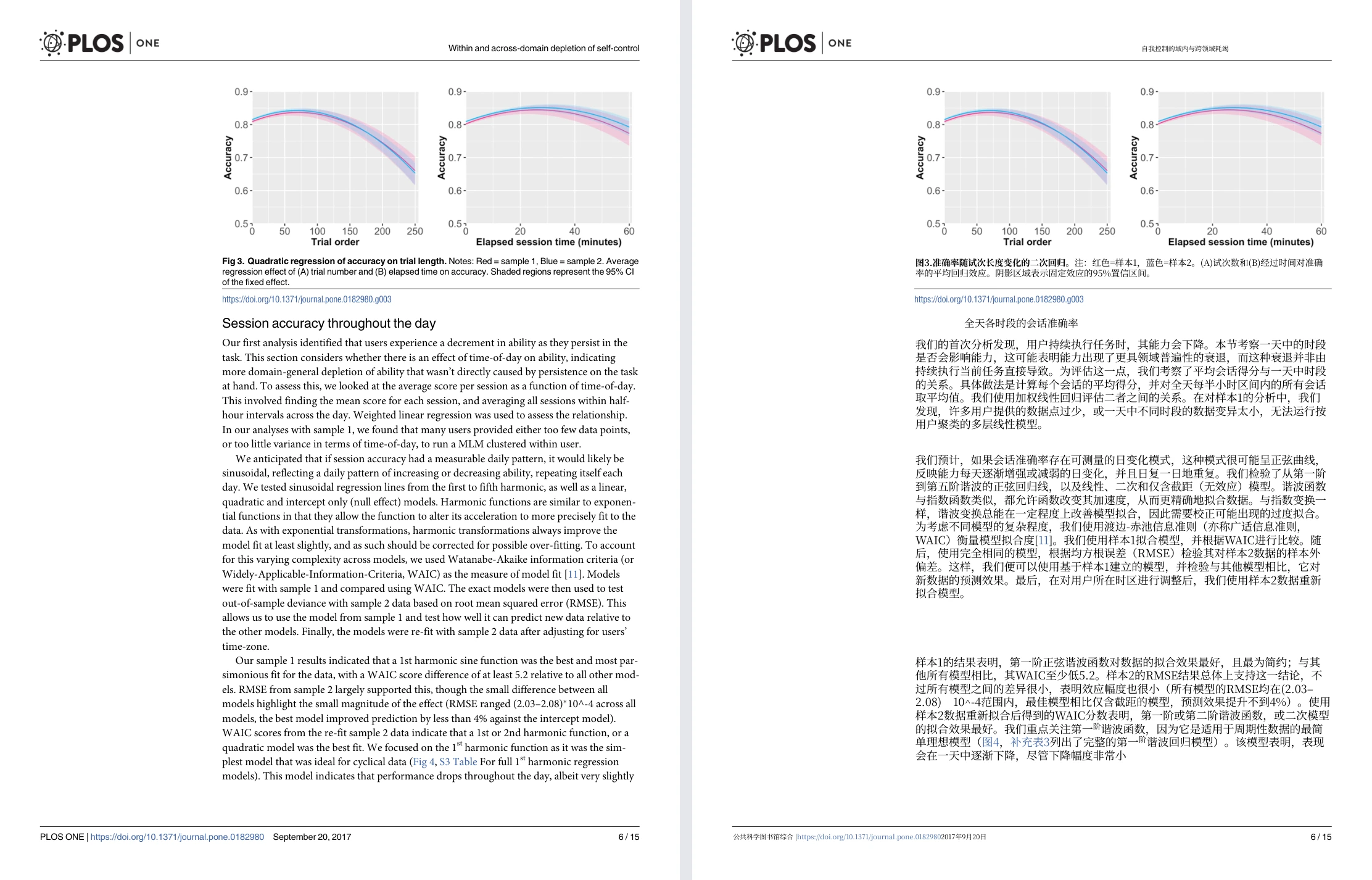
Equalang document translation: actual English-to-Chinese academic paper sample showing original English page (left) and translated Chinese page (right) with charts at top.
- Interactive Web Reading: Daily work often involves digital materials beyond static files. The Equalang Extension displays paragraph-by-paragraph bilingual translations directly beneath original text on foreign-language web pages. On supported platforms, it can also attempt live subtitle translation for public, unencrypted video streams where browser audio capture is permitted.
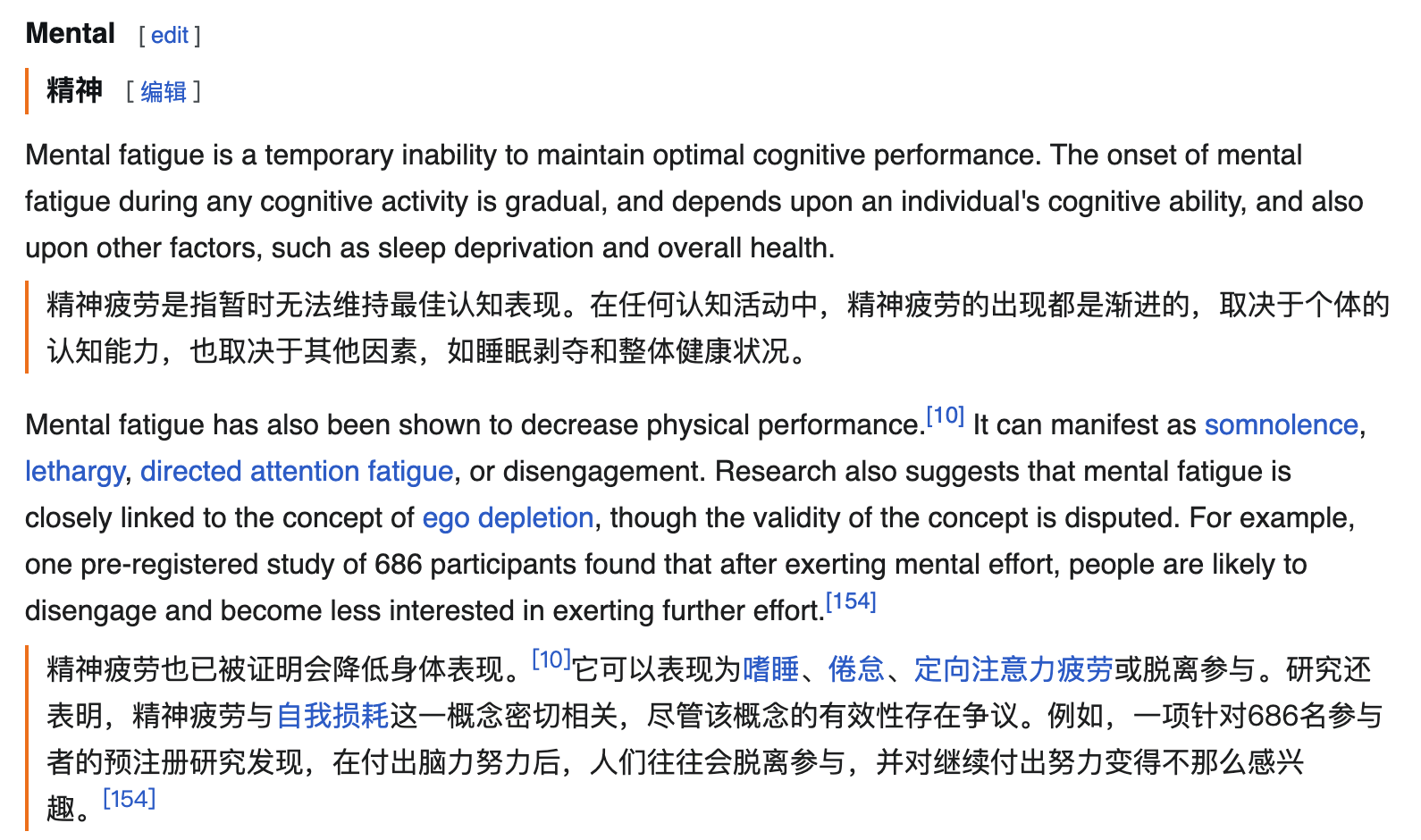
Equalang browser extension: actual English→Chinese web reading example showing paragraph-by-paragraph bilingual text.
- Assistant and Workflow Integration: While SYSTRAN API is tailored for enterprise service pipelines, Equalang provides an asynchronous HTTP API alongside Agent Skills and MCP integrations compatible with environments like Claude Code or Codex. Once configured with an API key and a supported client, knowledge workers, students, and developers can direct their AI assistants to translate files directly.
Which Solution Fits Your Needs?
- Consider SYSTRAN if your team needs to leverage established translation memories and bilingual glossaries, needs fine-grained dictionary rules to manage grammatical inflections, or must satisfy mandatory IT infrastructure requirements—such as deploying Translate Server behind a corporate firewall or setting up a dedicated Private Cloud instance.
- Consider Equalang if you are an independent researcher, cross-border professional, engineer, or student whose primary task is reading visually dense multi-column PDFs with formulas, translating presentation slide decks without manual layout cleanup, or reading foreign web documentation side by side without managing dictionary infrastructure.