Translating AI Paper PDFs: Formulas, Subscripts & Ratios
 Equalang
In brief
In AI papers, display equations and inline variables guide technical derivations. See how translation tools handle DeepSeek-V4 summations and compute ratios.
Keywords: AI paper translation, PDF math formulas, inline formula optimization, summation equations, compute to communication ratio
Reading modern machine learning papers requires constantly synthesizing prose, mathematical notation, and technical derivations. When researchers copy isolated passages to read elsewhere, text gets separated from the original page geometry. Equations and their explanatory context become disconnected, requiring readers to continually jump back and forth to re-anchor their reading position.
Reading a translated PDF that preserves its native layout helps maintain that visual context. Using Equalang for technical PDF translation keeps page flow and mathematical structures aligned in place, supporting side-by-side reading.
We look at authentic English-to-Simplified-Chinese translation samples from the DeepSeek-V4 technical report (single-column layout). Here, the formula cases showcase an Equalang output with formula optimization enabled, while competitor samples continue to use the previously evaluated translation files to compare identical content regions.
Case 1: Token-Level Compression Formulas and Following Prose
In technical papers, display equations tell only part of the story. The explanatory paragraphs immediately below them define how variables behave across dimensions, time steps, and token windows. When inline mathematical symbols distort or lose their fraction bars during translation, readers struggle to connect the prose with the formulas above.
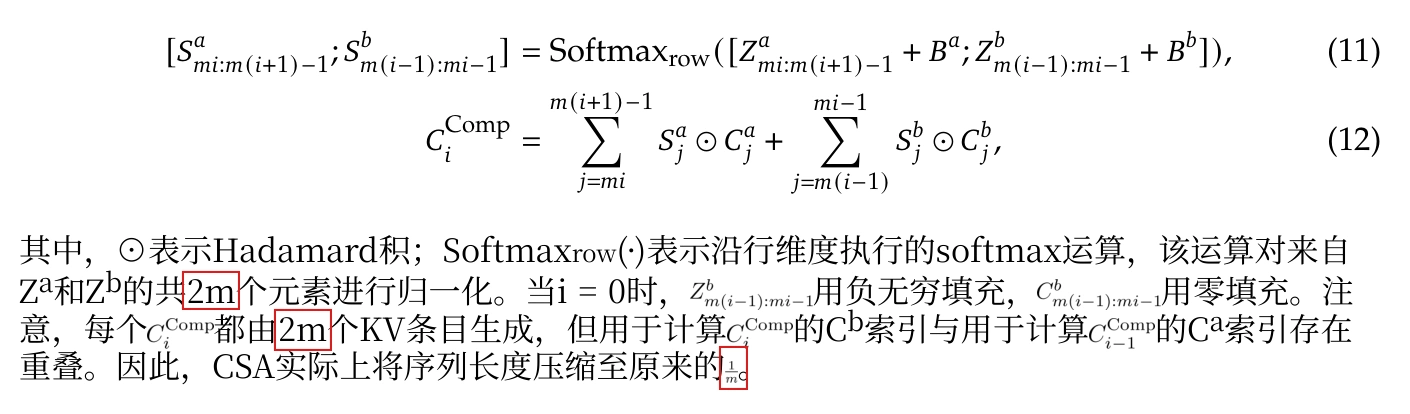
On page 10 of the DeepSeek-V4 report, equations (11) and (12) formulate the token-level compression mechanism. Equation (11) uses nested interval indexing and Softmax, while equation (12) incorporates two summation terms with upper and lower limits, Hadamard products, and an addition operator. The following paragraph defines nested interval subscripts for variables Z and C, compressed tokens indexed by i and i−1, two instances of 2m, and a concluding stacked fraction 1/m (red outline boxes in the screenshots serve as visual localization markers for review):
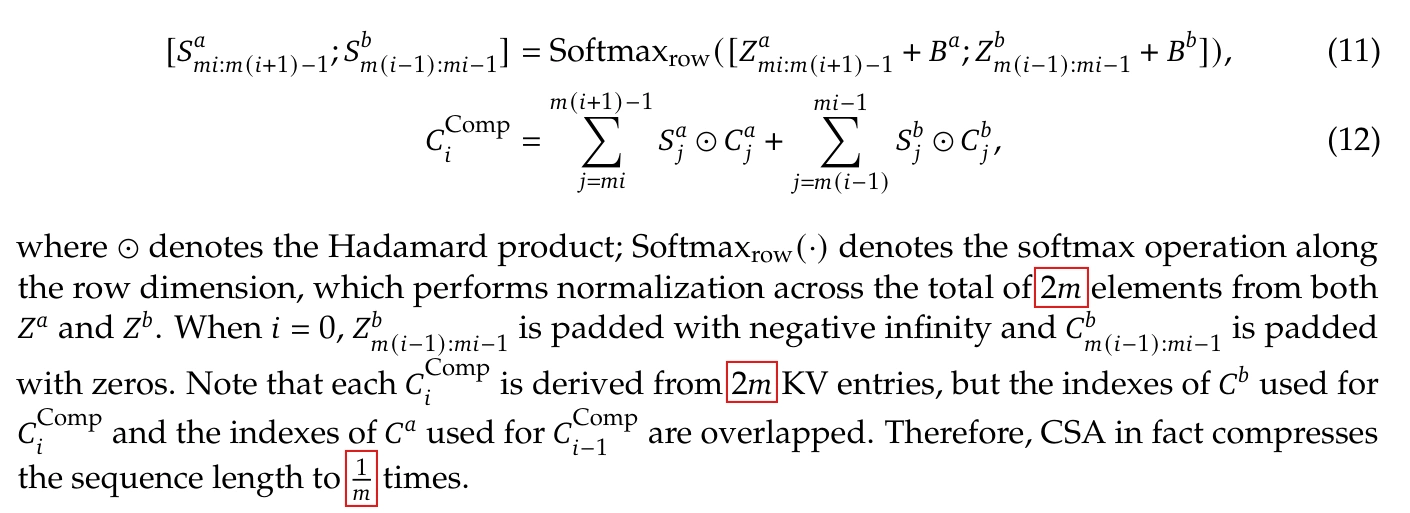
When translation tools process pages containing both display mathematics and dense inline subscripts, notable differences emerge across outputs:
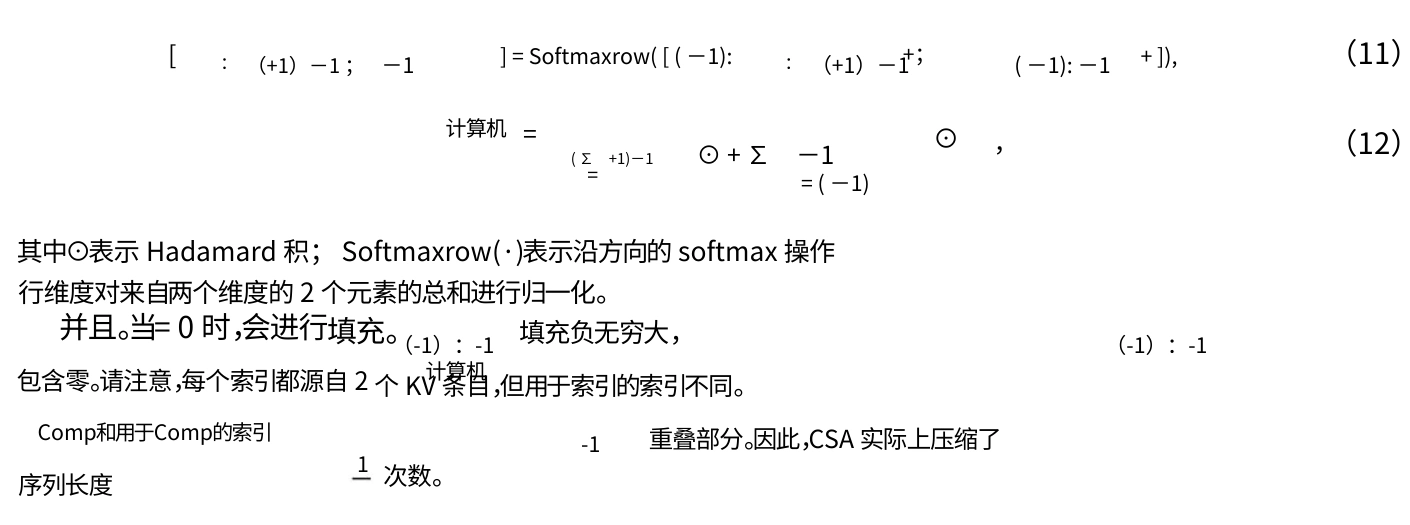
- Google Translate sample: The summation layout in the standalone equations is disrupted and multiple variable letters are missing, obscuring the original mathematical structure; in the following text, variable symbols and subscripts are scattered or omitted, interrupting mathematical continuity.
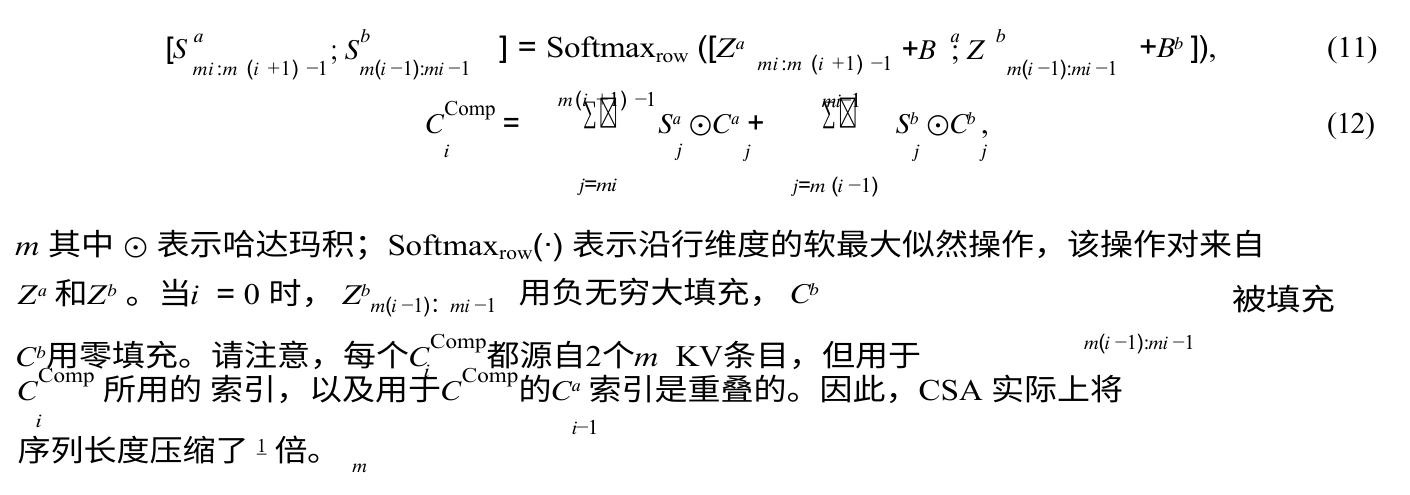
- DeepL translation sample: The summation symbols in equation (12) render as anomalous crossed-box characters, with limits detached from variables; in the explanatory paragraph, inline variables C and subscript indices break across line boundaries.
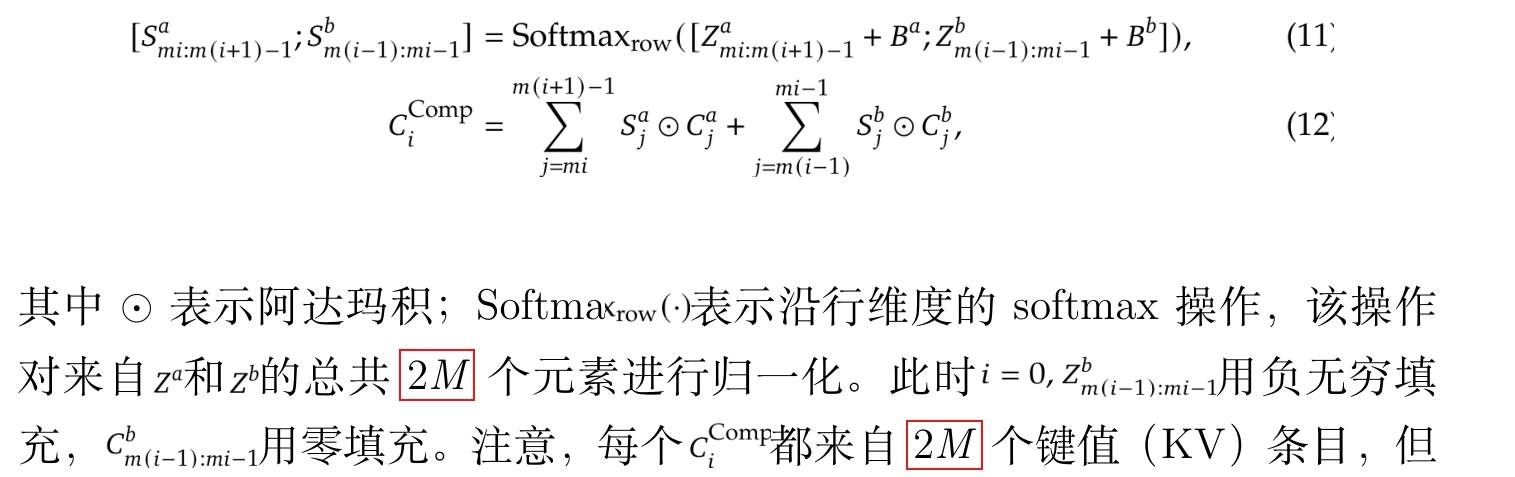
- Baidu Translate sample: On page 14, standalone equations (11) and (12) remain recognizable. In the explanatory prose, both instances of variable 2m display as capital 2M. As the paragraph naturally flows onto the top of page 15, the concluding factor renders as an elevated 1 followed by a capital M, lacking a horizontal fraction bar.

- Immersive Translate sample: Standalone equations (11) and (12) maintain orderly geometry with clear summation limits, and the following paragraph retains most inline symbols. However, at the end of the explanation, while the characters 1 and m are stacked vertically, the horizontal fraction bar is detached from the characters and left stranded at the bottom of the paragraph.
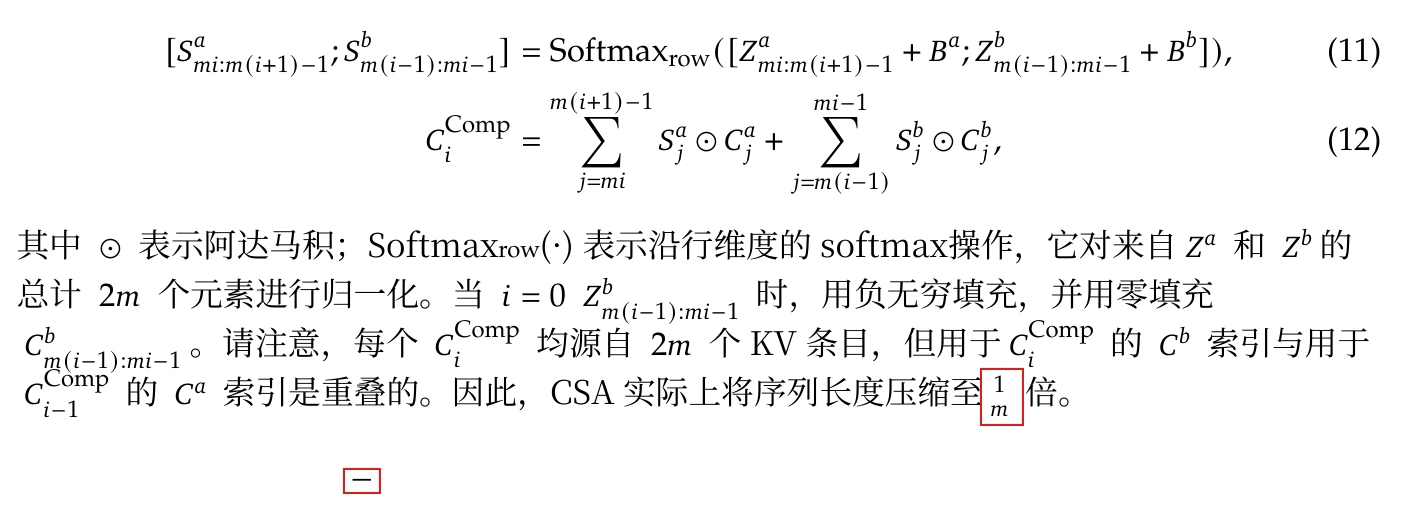
- Equalang translated output (Formula Optimization enabled): For documents containing dense mathematical derivations, Equalang provides a formula optimization option. With formula optimization enabled, displayed equations (11) and (12) preserve their summation limits, Hadamard products, and equation tags; in the explanatory text below, both 2m variables stay lowercase, nested interval subscripts for Z and C remain readable, and the concluding 1/m fraction retains its stacked layout with a horizontal bar.
Case 2: Compute-to-Communication Ratio and Parameter Expressions
In chapters detailing distributed systems and model scaling, every coefficient (such as parameters h and d) and subscript (computation comp versus communication comm) directly governs the accuracy of the expressions. If characters are altered or omitted during translation, the technical derivation falls apart.
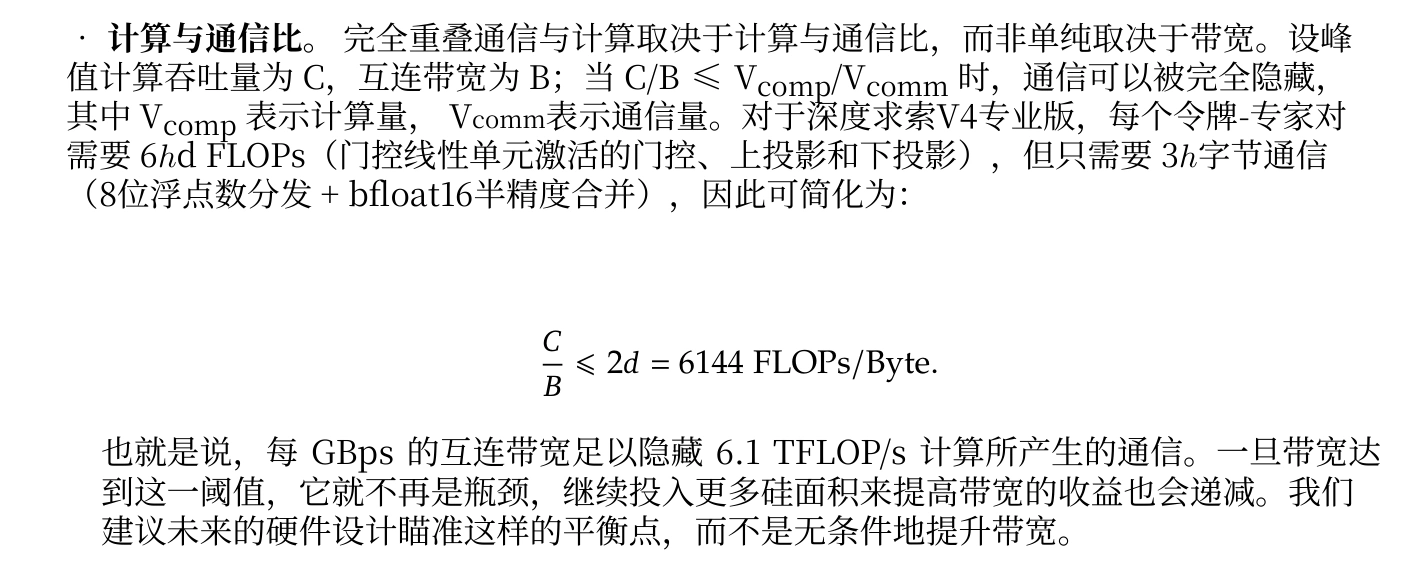
On page 16 of the DeepSeek-V4 report, the authors analyze the ratio between computation and communication. The section features the inline ratio V_comp / V_comm, definitions specifying 6hd and 3h coefficients, and a standalone ratio equation C/B ≤ 2d = 6144 FLOPs/Byte:
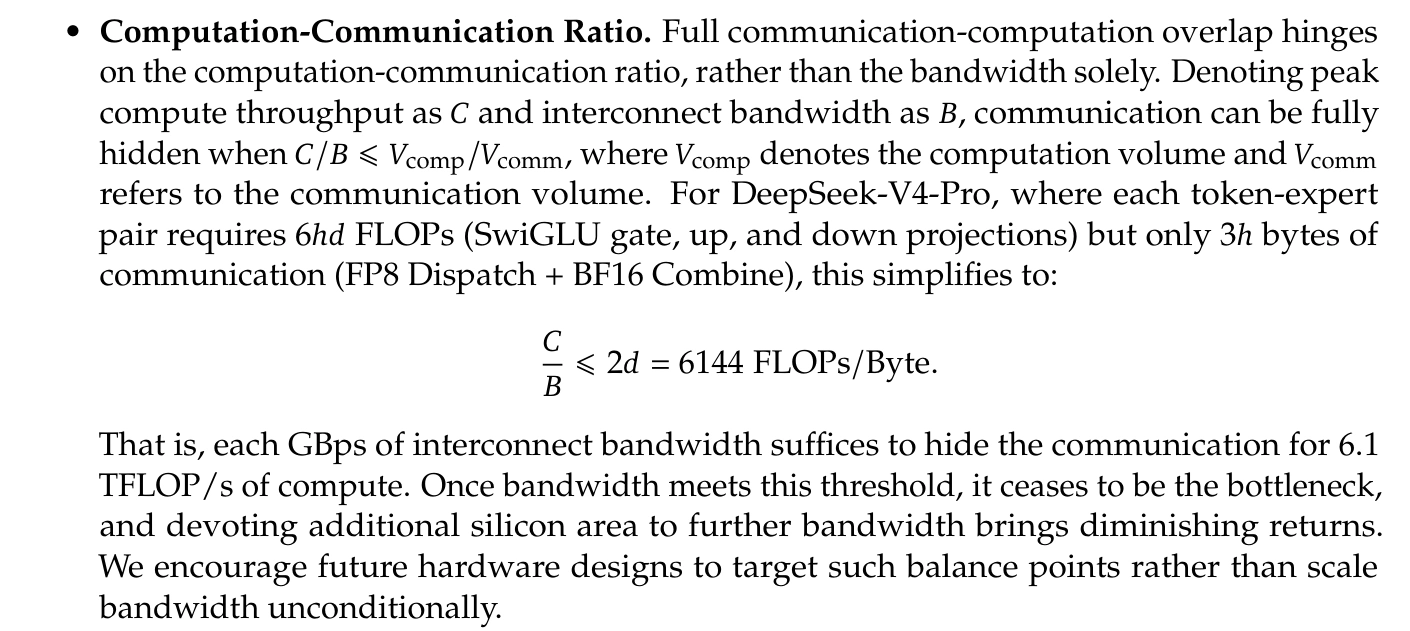
Comparing outputs across tools in this derivation highlights how variable fidelity impacts technical comprehension:
- Google Translate sample: Multiple essential variables (including C, B, V, h, d) and inequality signs are dropped from the text, and the display formula loses C/B and d, severing the derivation. (Note: the translation merged the following Power Budget paragraph onto the same line; the screenshot preserves it to avoid cutting the sentence).
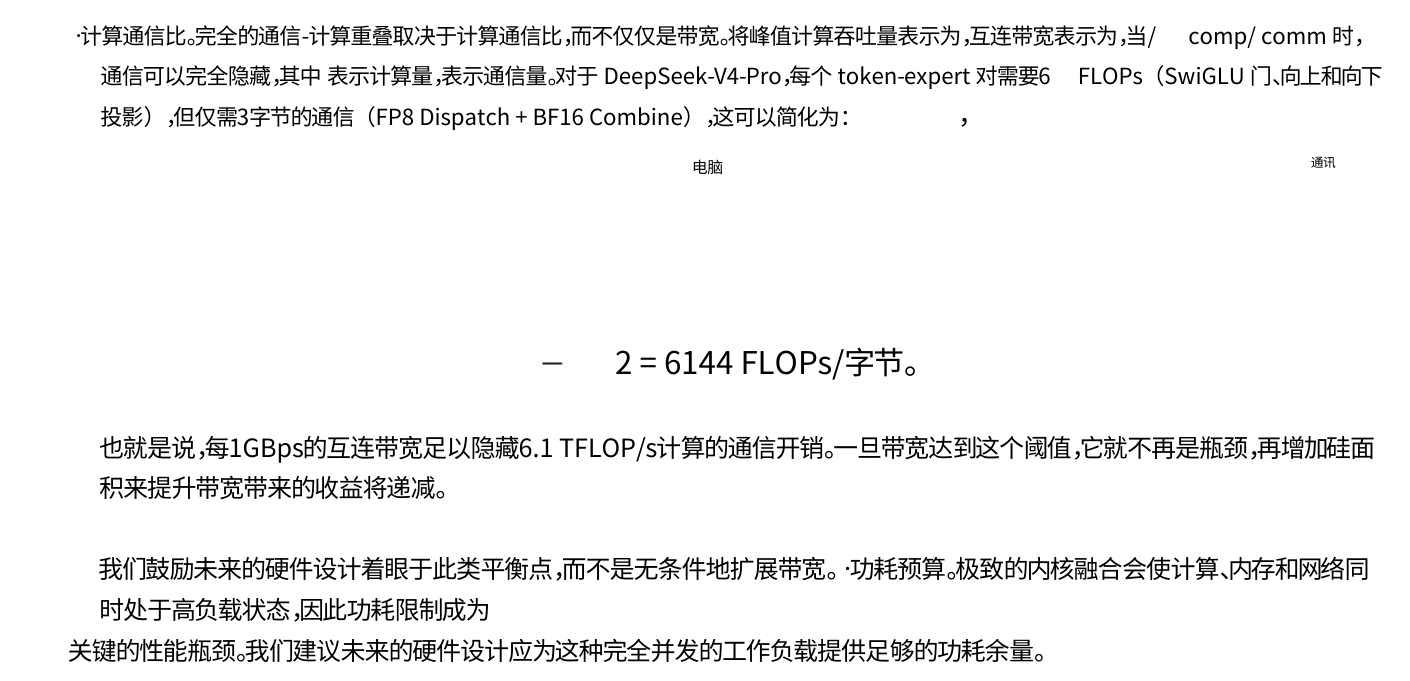
- DeepL translation sample: Inline subscripts, 6hd, and 3h coefficients are retained. While spacing within the display fraction C/B is elongated, the characters are complete and the mathematical logic remains legible.
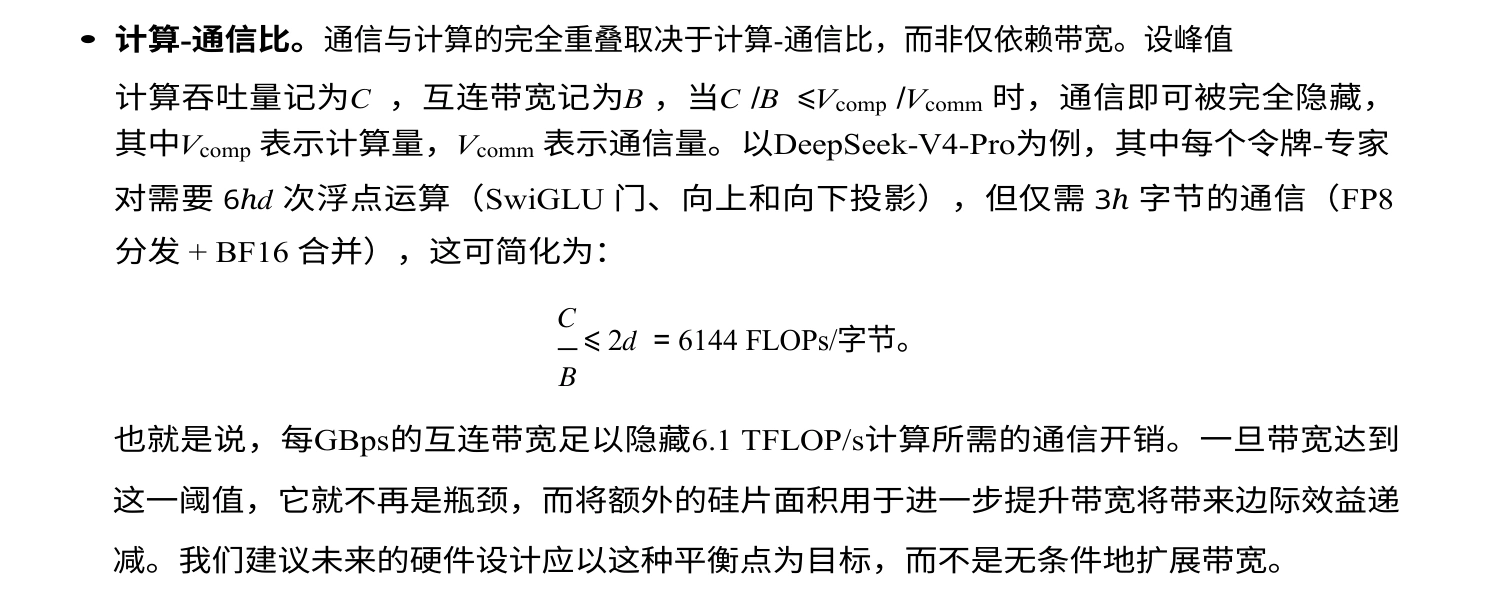
- Baidu Translate sample: The inline ratio is preserved as an image and the display C/B fraction remains intact. However, in the subsequent text, the expressions display as 6D and 3; the omission of variable h directly alters the mathematical relationship in the explanation.
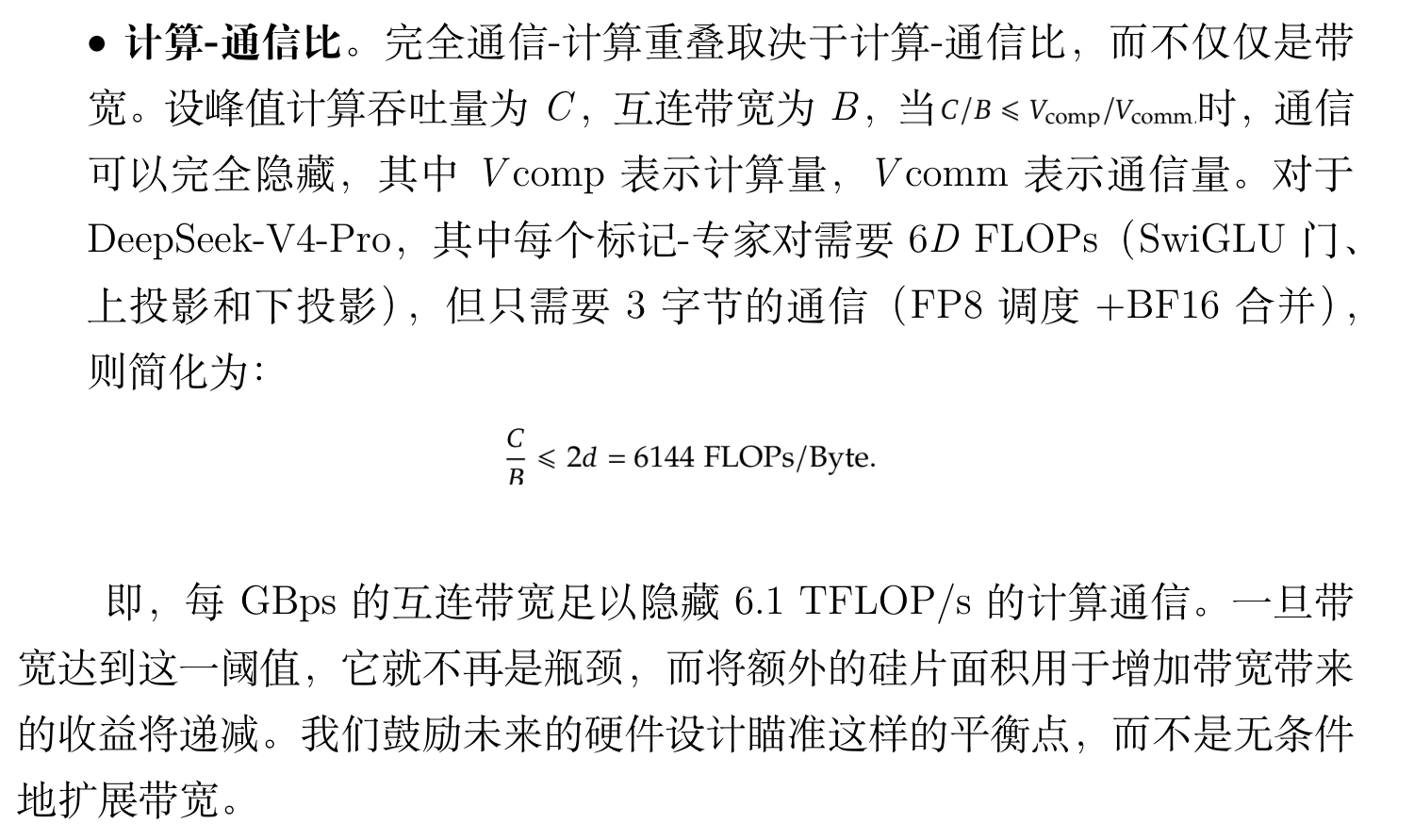
- Immersive Translate sample: The subscripts comp and comm are rendered as baseline text (appearing as Vcomp and Vcomm), reflecting a minor typographic baseline difference; coefficients 6hd and 3h as well as the display C/B ratio equation remain intact, keeping the overall calculation valid.
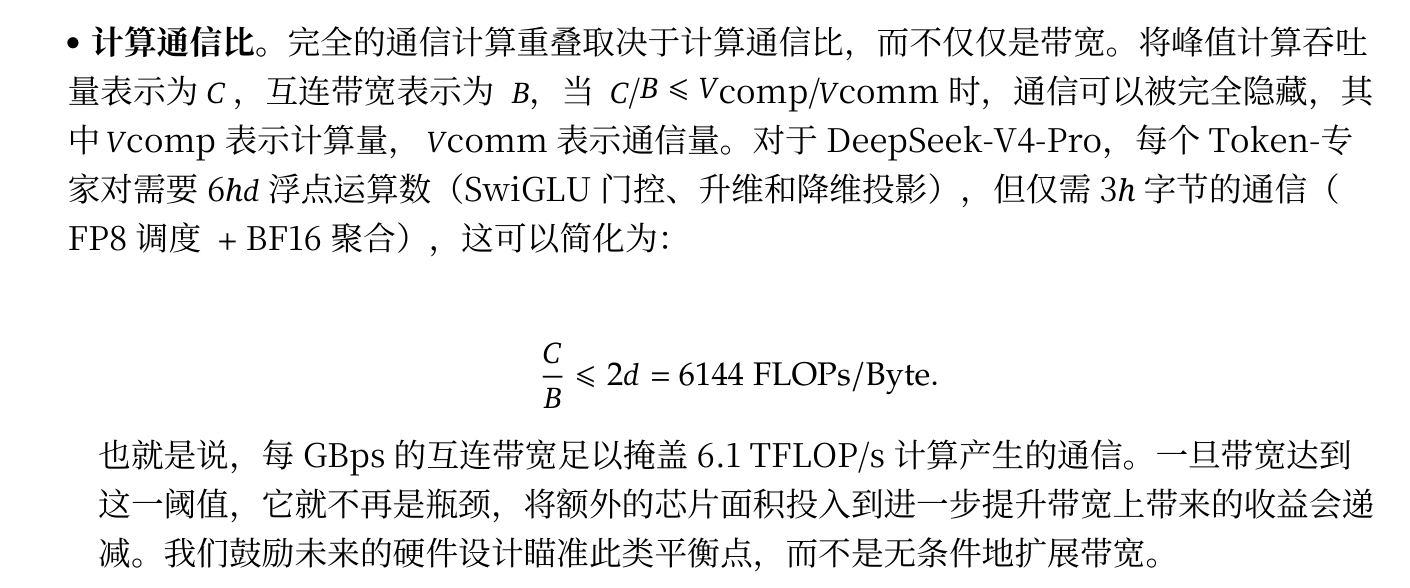
- Equalang translated output (Formula Optimization enabled): With formula optimization enabled, the inline conditions and definitions for V_comp and V_comm maintain their lowered subscripts, coefficients 6hd and 3h remain complete, and the standalone equation C/B ≤ 2d = 6144 FLOPs/Byte displays with clean structure, allowing readers to follow the technical expressions without disruption.
How to Translate an AI Paper PDF
To translate a machine learning paper or technical whitepaper with preserved structure:
- Navigate to the Equalang document translation portal and sign in;
- Upload your technical PDF;
- Select your desired target language, enabling formula optimization if the document features dense mathematical derivations, and initiate the translation task;
- Download the translated PDF once processing finishes.
To get the most out of technical translations in research workflows:
- Side-by-side verification: Position the source paper on one screen and the translated document on another to rapidly scan arguments while keeping access to the original text;
- Targeted variable checks: When encountering novel loss formulations or complex bounds, cross-check specific index definitions directly against the primary publication;
- Cross-reference variable expressions: Inspect formula expansions against inline variable explanations to ensure parameters and technical expressions align.